China turned the desert into forests by planting billions of trees. Twenty years later, scientists discover that this green wall has changed the water cycle
The so-called Great Green Wall of China is one of the largest environmental projects on the planet. However, a recent study reveals an unexpected consequence: massive reforestation has altered water circulation within the country, reducing water availability in many regions.
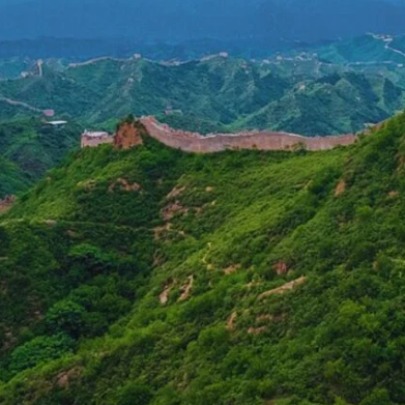
Reforestation is often presented as one of the clearest solutions to desertification and climate change. China opted for this strategy before anyone else and on a gigantic scale. However, recent research shows that transforming entire landscapes into forests not only changes the color of the territory: it can also modify the functioning of the water cycle on a continental scale. The largest reforestation campaign in history changed the landscape of China In the late 1970s, the Chinese government launched a project that was unprecedented. Desertification was advancing rapidly in large areas of the north of the country and threatened both agriculture and cities. The response was a monumental strategy: planting trees on a scale never seen before. The program, known as the Great Green Wall, promoted the planting of approximately 78 billion trees in just four decades. Its objective was to stabilize soils, stop the advance of deserts and increase vegetation cover in regions affected by erosion. The results have been visible even from space. Large areas of the north and west of the country, which half a century ago appeared on maps as arid or degraded landscapes, today have much denser vegetation cover. Soil erosion was reduced, dust storms decreased and the project became an international benchmark for environmental restoration. This success inspired numerous governments and international organizations. Similar initiatives have been debated or promoted in different parts of the world, including Europe, where the Nature Restoration Law promotes recovering degraded ecosystems. However, recent research has begun to reveal that this giant environmental experiment has also produced unexpected effects. Planting trees also changes how water circulates. A study published in the journal Earths Future analyzed how the water cycle evolved in China between 2001 and 2020, crossing data on vegetation cover, precipitation and evapotranspiration. The result points to a clear conclusion: the expansion of forests has significantly altered the circulation of water within the country. Trees extract large amounts of water from the soil through their roots and release it into the atmosphere in the form of vapor through evapotranspiration. This process is part of the natural functioning of ecosystems and, on a small scale, usually has beneficial effects on the local climate. The problem appears when the phenomenon multiplies on a continental scale. The researchers observed that in many regions where reforestation was most intense, soil moisture decreased noticeably. Some of that evaporated water does not necessarily return as rain in the same place. Atmospheric currents can transport it hundreds or even thousands of kilometers before precipitating. In other words, vegetation is redistributing water within the country. The result: winners and losers on Chinas water map The changes detected by researchers have not been uniform. Some regions have gained moisture thanks to this atmospheric transport, while others have seen water availability decline. According to the study, about 74% of the Chinese territory has experienced a decrease in the water available in the soil. The areas that were most affected are concentrated in the north and east of the country, areas where a large part of the population is located and where agriculture has a crucial weight. This is especially problematic because these regions already had a delicate water situation. China has had a very marked geographical imbalance for decades. The north concentrates almost half of the population and more than half of the arable land, but only has around 20% of the countrys water. The expansion of forests in these dry areas has intensified that tension in some places. At the same time, some higher altitude regions, such as parts of Tibet, have received more moisture due to the atmospheric displacement of water vapor. The Chinese experiment leaves a lesson for the rest of the world The Chinese case shows that large-scale environmental solutions can have complex effects that are not always anticipated. Planting trees remains a powerful tool to combat soil erosion, restore degraded ecosystems and capture carbon. However, the study shows that massive reforestation is not a neutral intervention when analyzed from the perspective of the hydrological cycle. The key seems to be in the design. The researchers point out that forest planning should consider in much more detail variables such as water availability, the type of vegetation planted and the climatic characteristics of each region. For Europe, which is considering expanding its ecological restoration programs, the Chinese example serves as an important reminder: recovering forests is a valuable strategy, but doing so without an in-depth hydrological analysis could generate unexpected consequences. In other words, planting trees can change the landscape. But it can also change something much more invisible: the way water moves across an entire continent.