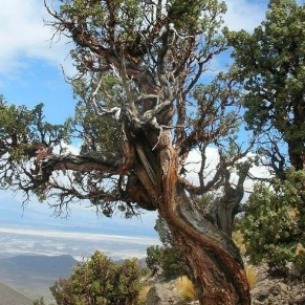
It can measure more than 20 meters and grows to 5000 meters high, this is the Queñoa tree
In the heights of the Andes Mountains, above the line where most plants stop growing, a tree emerges that defies the extreme conditions of climate and geography. This tree species has been documented up to more than 5,200 meters above sea level, making it the tree that grows at the highest altitude in the world.
Although in appearance the Queñoa may seem small or fragile, its presence in such a demanding environment is a testament to its resistance and the extraordinary adaptation of the Andean flora. The relationship between the Queñoa and its high Andean environment is marked by the constant fight against extreme temperatures, intense radiation and scarcity of oxygen. A tree that defies the limits of height The Queñoa is not just any tree: its presence in exposed mountainous areas makes it an emblem of plant life in extreme conditions. This figure may seem moderate compared to to forest giants, but in the context of an environment where wind pressure, cold and radiation are constant, it represents a botanical feat.Characteristics and adaptation of the QueñoaAlthough its ability to grow at high altitudes is perhaps the most striking, the Queñoa has other biological peculiarities that allow it to survive where very few trees do.1. Extreme geographical distribution: this species is found in high Andean areas of South America, including Chile, Bolivia and Argentina. In Bolivia, its forests have been recorded even above 5,200 meters high.2. Moderate but resistant size: although the Queñoa can measure nearly 20 meters when it grows in favorable conditions, its most common specimens in high areas usually measure less due to extreme environmental factors. Adapted trunk and foliage: its trunk has twisted and dense shapes, with a bark that protects the tree from intense cold and extreme solar radiation. The small, dense leaves help conserve water and resist night frosts. Environmental services in the highlands: Queñoa forests help regulate water runoff, reduce soil erosion and retain nutrients, providing stability to high Andean ecosystems. Interaction with human culture: for indigenous communities of the highlands, Queñoa has had traditional uses as fuel, construction material and medicine. The ecological role of QueñoaEl Queñoa is not only extraordinary for its capacity of growing at high altitudes, but also for the ecological role it plays. In an environment where life forms are scarce, this tree creates microhabitats that allow the existence of other species and maintains essential ecological functions, such as water capture and soil stabilization. However, the forests of Queñoa face significant threats due to intensive exploitation - especially for firewood and construction - and fires set to prepare grazing lands. These activities have drastically reduced their populations, especially near inhabited areas, which has led to various conservation initiatives. Reforestation projects and cooperation between public and private entities seek to protect this vulnerable species and restore its forests in key areas of the Andes Mountains. The objective is to guarantee that the Queñoa, with its incredible ability to grow at extreme heights, remains part of the natural and cultural landscape of South America.