
Impregnating stains on wood: water repellency and smart maintenance
Outdoors, wood rarely fails overnight. It fails by accumulation. One day you notice a light gray haze, then a micro-crack on an edge, then a lifted area around a knot-and by the time the owner reacts, the issue is no longer cosmetic but structural (moisture cycling, fungal growth, surface degradation). That is why exterior coatings should not be chosen as "gloss" or "color". They should be chosen as a protection and maintenance strategy.
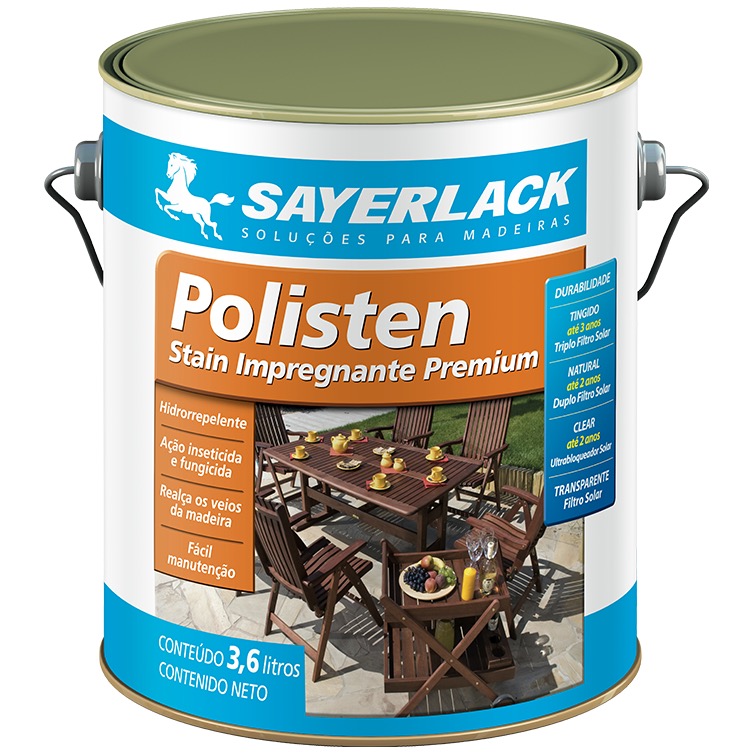
Hugo Daniel Valetto, through its technical store, publishes and sells products aimed at woodworking and wood maintenance. Within that offer sits Polisten - Impregnating Stain (presented on the page under the Sayerlack brand), framed around three core ideas: water repellency, insecticidal/fungicidal action, and easy maintenance. Those phrases appear often in catalogs, but they map to real technical behaviors in exposed wood.
This note breaks down what an impregnating stain does, translates it into process discipline, and explains why planned maintenance is almost always cheaper than crisis-driven repairs.
1) What an impregnating stain is (and what it isn't)
An impregnating stain does not behave like a traditional thick film varnish. Instead of forming a rigid continuous layer, it is designed to penetrate and protect the near-surface zone, leaving a more flexible protection that is less prone to peeling.
That approach delivers two industrial advantages:
- When wood moves (moisture-driven expansion/contraction), protection can follow without cracking.
- When it is time to renew, cleaning and a new coat are often enough-no harsh stripping.
What it does not do is "fully armor" wood regardless of design. Performance still depends on substrate preparation, applied build, and detailing (drainage, edges, joints).
2) Water repellency: reducing fatigue from moisture cycling
The key word outdoors is cycle. Wood absorbs and releases moisture, and repeated cycles generate stress. Water repellency reduces liquid water intake during rain and cleaning, which translates into:
- Less swelling of surface fibers.
- Lower micro-crack formation over time.
- Reduced risk in joints where water tends to linger.
In decking, failures often start at end grain, edges, and fastening zones-not in the middle of a plank. A good impregnating system should prioritize those vulnerable areas.
3) Insecticidal and fungicidal action: what it means in real use
Polisten is presented as having insecticidal and fungicidal action. In use terms, this typically aims to reduce biological risk in the near-surface zone: staining fungi, mildew, and-depending on context-wood insects that exploit moisture.
Two practical technical clarifications matter:
- No coating replaces good design. If water is trapped by detailing, biology will find a way back.
- Biological control works best when wood enters the system at appropriate moisture content. Applying over wet wood can trap moisture and accelerate haze, staining, and degradation.
4) Application as a process: surface prep, moisture, end grain, and coat build
Real performance is decided by process. A sensible exterior workflow often includes:
- Sanding and cleaning: remove raised fibers and dust (dust reduces penetration and adhesion).
- Moisture control: avoid application right before rain or under extreme humidity.
- A first coat designed for penetration rather than film build.
- A second coat based on absorption and exposure level, with extra attention to edges and joints.
For decks, the logic extends to underside protection when accessible, and especially to end grain. End grain is a moisture highway. If it is neglected, the system tends to fail there first.
5) Smart maintenance: why "easy maintenance" is a technical attribute
The total cost of an exterior wood element is not the first application-it is the sum of maintenance cycles across years. A stain system with simpler renewal enables:
- Refreshing protection before visible failure occurs.
- Avoiding deep sanding and stripping.
- Maintaining color and repellency through shorter interventions.
A practical rule is to plan maintenance intervals by exposure (full sun, heavy rain, pool areas) and by use (high foot traffic). The key is to intervene before water and UV win the surface.
6) Trends: fewer rigid films, more "renewable" exterior systems
The exterior trend is clear: shift from rigid films that peel to systems that can be renewed with less aggression. That includes stains, modified oils, and hybrid systems, all focused on:
- Sustained water repellency.
- UV resistance to slow graying and surface breakdown.
- Compatibility with realistic maintenance routines.
In that framework, Polisten's positioning as an impregnating stain for exterior and interior use, emphasizing repellency and maintenance, aligns with an industrial mindset: protect and plan, rather than "coat and forget".
Editorial close
Exterior wood doesn't require miracles-it requires consistency. A correctly specified and applied impregnating stain turns maintenance into routine and prevents it from becoming repair. Water repellency, biological control, and a renewal-friendly workflow are ultimately the same idea: slowing degradation. And in woodworking, slowing degradation is how you gain years of service life without losing the material beauty that makes wood worth choosing in the first place.