The imposing ancient oak with a perimeter of 9 meters hidden in one of the smallest towns in Spain
Sometimes, great natural treasures are not found in national parks or easily accessible protected enclaves. In one of the smallest towns in Spain a monumental oak survives that not only impresses with its size, but also because of the history it has accumulated over centuries. This tree has become a symbol of resistance, memory and biodiversity. Do you want to know its characteristics?
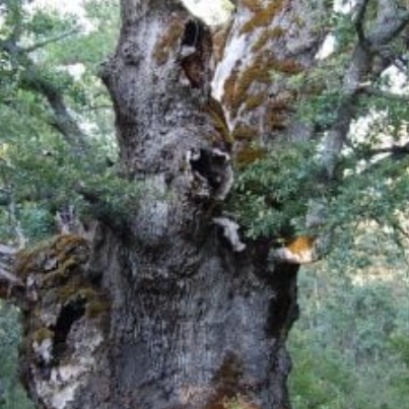
The Verruga Oak, the ancient oak with a 9-meter perimeter hidden in BurgosWith a trunk that reaches almost nine meters in perimeter, the one known as the Verruga Oak is one of the most imposing examples of its species in Spain. Its dimensions are exceptional even within the catalog of singular trees, and its irregular silhouette reflects an unusual longevity. Estimates place its age at several centuries, with indications that it could be approaching a millennium, making it one of the oldest oaks in Castilla y León. This tree belongs to the Quercus pyrenaica species, typical of mountain and mid-mountain areas, especially resistant to harsh winters and infertile soils. However, it is not common to find specimens of this species that have reached such extraordinary development. These types of long-lived trees play a fundamental role in the conservation of biodiversity. Furthermore, they function as authentic natural testimonies, capable of offering information about the evolution of the climate, soil and landscape over the centuries. Its presence reminds us of the importance of preserving the last great specimens of the native forest. Every crack in the trunk and every twisted branch of the Wart Oak speaks of the passage of time. The tree has survived extreme winters, changes in land use and profound social transformations. While the environment was changing, the oak remained standing, consolidating itself as a central element of the landscape. The Roble de la Verruga is located in one of the smallest towns in Spain. This ancient tree is located in the municipality of Jaramillo Quemado, in the province of Burgos, a town with barely more than ten inhabitants. While the oak has resisted for centuries, the municipality has suffered the progressive depopulation that affects a good part of inland Spain. The isolation of the environment has been key to its conservation. Far from the crowded tourist routes, the Wart Oak remains in a quiet space that invites contemplation and respect. For Jaramillo Quemado, this tree has become a symbol of identity and one of the great natural treasures that rural Spain still preserves. An almost ancient oak protected as a unique tree due to its natural value. The interest of the Wart Oak is not limited to its size. It has been cataloged as a unique tree due to its ecological, landscape and cultural relevance. Its wide canopy creates a favorable environment for birds, insects and other species, acting as a natural refuge and contributing to the balance of the ecosystem.