Spain planted millions of eucalyptus trees to get cheap wood. 90 years later, we have confirmed that they are a green desert
This tree was planted by millions in Spain and scientists now link it to the loss of biodiversity For decades it was the tree chosen to repopulate forests and supply the paper industry.
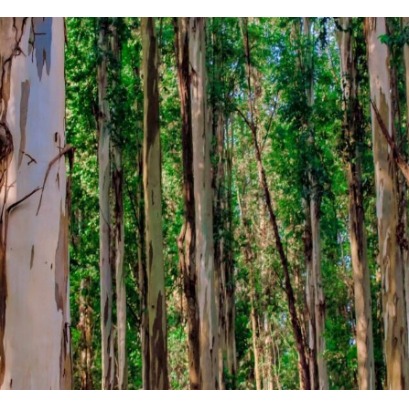
It grows quickly, provides wood in a few years and requires relatively little care. However, its expansion has also had consequences on the landscape and the fauna that inhabits it. The eucalyptus today occupies an important part of the forest area in northern Spain, especially in Galicia and the Cantabrian coast. What began as an economic solution to produce wood has also become an object of study by scientists, who analyze how these plantations affect natural ecosystems. A work carried out by researchers from the University of Santiago de Compostela and the Higher Council for Scientific Research (CSIC) provides new evidence on this impact. The study, carried out in the Parque Natural das Fragas do Eume, concludes that eucalyptus plantations are home to many fewer birds than native forests. A forest with less life The researchers compared 240 plots of Atlantic forest and eucalyptus plantations. The results show that, as the presence of this species increases, both the quantity and diversity of birds decreases. The most affected are those that feed on insects or need cavities in old trees to breed, such as tits or great woodpeckers. The reason is that the eucalyptus generates a very different habitat from that of a mature forest: it offers less food, hardly develops undergrowth and is usually cut down before reaching the necessary age to form natural holes in which to nest. This reduction in birds not only affects biodiversity. Many species play essential functions in the balance of the forest, such as insect control, seed dispersal or maintaining the health of the ecosystem. A very profitable tree, but with costs The eucalyptus arrived in the Iberian Peninsula in the 19th century, although its expansion occurred mainly from the 1940s to supply the growing pulp and paper industry. Its rapid growth made it one of the most profitable forest species. It currently represents an important part of the Galician forest economy. According to the report A Cadea Forestal-Madeira de Galicia 2025, the sector generates around 2.5 billion euros annually and employs more than 19,000 people, which explains the difficulty of limiting its expansion despite scientific warnings. Various studies also indicate that eucalyptus modifies the soil and makes the development of native vegetation difficult. Its leaves contain compounds that limit the growth of other plants and, when falling into streams and rivers, they can alter aquatic ecosystems. The solution is not to eliminate it. The researchers themselves clarify that the objective is not to eradicate the eucalyptus, but to make its forestry use compatible with the conservation of biodiversity. Among the proposed measures is leaving strips of native vegetation without clearing within the plantations and promoting the recovery of the undergrowth. These actions make it possible to increase the presence of insects and create refuges for birds without completely giving up wood production. The authors also remember that the study has been carried out in a specific space and focused on the bird community, so its conclusions should not be automatically extrapolated to all ecosystems. Even so, the results reinforce an idea that the scientific community has been pointing out for years: forests made up almost exclusively of eucalyptus trees offer much less biodiversity than native forests.