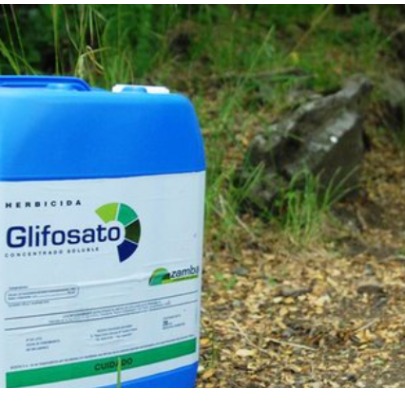
The debate over the use of glyphosate in Misiones: prohibit or regulate
In his opinion column on "Glyphosate and the debate we must have in Misiones, forestry engineer Nicolás Ocampo, president of the Forestry and Environmental Association of Misiones (AFAMI), reflects on the controversy generated by the passed law in the province that prohibits the use of the herbicide. Glyphosate kills. Antibiotics, aspirin, and even salt can also cause serious harm and even death when used or consumed inappropriately or in excessive amounts.
The phrase may be provocative, but it serves to open a debate that Misiones needs to give rise to: should we discuss the absolute prohibition of glyphosate or should we discuss how, where, how much and under what conditions phytosanitary products are used? After three years of sanctioning Law VIII No. 103 on the Promotion of the Production of Bioinputs, which establishes in its article 7 the prohibition of the use of glyphosate, I consider that we have an opportunity to seriously debate this policy and, fundamentally, to take off our masks. It is not about defending a product at all costs or demonizing it. It is about building a consensual position between the State, professionals, producers, workers and society. It is true that there is scientific evidence on the risks associated with certain phytosanitary products and that residues of these substances have been detected in people, water courses and food. It is also true that incorrect use can generate real consequences on the health of applicators, third parties and the environment. But if we really want to address the problem, we must analyze the different productive contexts. In Misiones, for example, there is a historical problem linked to the use of phytosanitary products in certain activities, particularly in the tobacco sector, where the conditions of application and exposure deserve special attention. The forestry sector presents a different reality. The province has approximately 400,000 hectares of cultivated forests, and an important part of that area is under forestry certification systems, including PEFC/CERFOAR and FSC. In this sector, the use of phytosanitary products is mainly concentrated during the first three or four years from the preparation of the land for planting, within rotation cycles that can extend approximately between 13 and 15 years. That is, during a large part of the growth of the trees, no applications are made. This does not mean that the forestry sector is exempt from environmental impacts nor that certification is an absolute guarantee. It means that there are protocols, controls and management criteria that allow the use of these products to be reduced and organized. Furthermore, the forestry sector is currently the productive activity in Misiones that occupies the largest cultivated area, above yerba mate. Therefore, any decision on the use of phytosanitary products in our province must necessarily consider its impact on this activity, on employment and on the competitiveness of companies and producers. Glyphosate, like many other products used in agricultural and forestry production, is a tool. Used correctly, it can help reduce certain costs and facilitate productive work; Used incorrectly, it can generate impacts on applicators, third parties and the environment. Therefore, it is not about advocating its use. Nor to make it responsible for all environmental problems. It is about recognizing that we are dealing with a technological tool that must be subject to clear rules, training, controls and responsibility. We must also discuss the origin and history of this technology. The development of modern herbicides was strongly linked to the growth of large multinational companies and an agricultural production model that generated enormous economic and technological transformations, but that also received strong questions due to its environmental impacts, business concentration and its effects on food sovereignty and the genetic diversity of seeds. We should not ignore that discussion. But we should not allow it to prevent us from rationally analyzing the concrete reality of Misiones. Our condition as a border province adds another element that cannot be ignored. When a product is prohibited that continues to be used legally in neighboring countries and there is a productive demand to use it, we must also ask ourselves what happens when the prohibition is not accompanied by effective controls. The risk is that an illegal market appears, without traceability, without training, without control over doses, without supervision over applications and, especially, without correct management of packaging. gaps.A prohibition policy that cannot be controlled can end up generating exactly the opposite effect to that sought: greater environmental and health risks. Therefore, before making definitive decisions, we need serious and comprehensive studies. Do we know how much employment could be affected? How much would production costs increase? What impact would it have on the competitiveness of our companies and producers compared to Brazil, Paraguay and other markets? What technical alternatives exist for each crop? What would be the cost of replacing certain practices? And what specific environmental benefits would we obtain? So far, the economic debate needs more evidence. Many actors in the productive sector warn that an absolute ban could generate significant increases in production costs and affect competitiveness. Some of these warnings may be exaggerated and others may be real. The only responsible way to know is to study it. Ban or regulate: that is the real debate. I think we must abandon extreme positions. Misiones already has a regulatory framework that can be a fundamental tool to advance in this sense: Law XVI No. 144 on Phytosanitary and Home Health Products, which establishes mechanisms linked to the responsible use of these products, including mandatory prescription and intervention of professionals, along with technical responsibility. The problem, then, is not only what the law says, but how we ensure that the law is effectively complied with throughout the provincial territory. For this, resources are needed. Human, technical, technological and economic resources that make it possible to supervise, train, register applications, control marketing and verify compliance with professional recipes. It is also necessary to strengthen the organizations responsible for control and generate traceability mechanisms that allow knowing which product is used, where, how much, who prescribes it and who applies it. A regulatory policy without resources to supervise runs the risk of simply becoming a written standard. Therefore, if we really want to protect health and the environment, we must strengthen the application of Law XVI No. 144 and use all available tools before moving towards prohibitions that may be difficult to control. We need a provincial policy that involves specialized professionals, producers, workers, technical organizations and a true control body. A policy that establishes: • mandatory and effective agronomic recipe; • intervention and responsibility of qualified professionals; • mandatory training for applicators; • registration and traceability of applications; • clear application protocols; • distances and safety conditions; • correct management of empty containers; • soil and water monitoring; • protection of exposed people;• budgetary strengthening of inspection agencies;• effective controls throughout the territory, especially in rural and border areas;• and severe and exemplary fines for those who fail to comply and cause damage to people or the environment.But this policy should not end there.Promote alternatives, not just prohibitLaw VIII No. 103 on the Promotion of the Production of Bioinputs itself provides us with a tool to move in that direction. The standard not only establishes a regulatory framework for bioinputs, but also proposes among its objectives to promote its technological development, promote its use, improve soil fertility, strengthen the biological control of pests and diseases and promote techniques linked to organic production systems. Therefore, instead of thinking only in terms of prohibition, we should value this tool and give it the necessary resources so that it can meet its objectives. Misiones can move towards production with less dependence on synthetic products, but this transition must be accompanied by research, technological development, training, technical assistance, financing and economic incentives for producers and companies that adopt alternatives. The production of bioinputs can also become an opportunity to generate knowledge, employment and added value within our own province. But that opportunity must be built by looking forward and learning from previous experiences. We cannot replace one model of dependency with another. If we are going to promote bioinputs, we must do so by creating the conditions so that multiple companies, ventures and technological developments can emerge, with clear rules, competition and transparency, regardless of their origin or connection with the State. The objective must be to create a true bioinputs market, where different actors can research, produce, market and compete on equal terms. The State must play a fundamental role, but as promoter, regulator, supervisor and generator of knowledge. Organic production requires additional effort. It requires more management, knowledge, planning and, many times, higher costs. If as a society we want this model to grow, it is not enough to prohibit the opposite product: the alternative must be incentivized. We can think of significant tax reductions for those who produce under certified systems, technical assistance programs, differential financing, trade promotion and, fundamentally, policies that help find markets willing to pay for differentiated products. The transition towards more sustainable production systems should not be built from prohibition, but from the promotion and generation of viable alternatives. In Ultimately, it is not about choosing between glyphosate or organic. It is about building a productive policy that allows progressively reducing dependence on synthetic products, promoting biological and organic alternatives and, at the same time, guaranteeing that while certain tools continue to be necessary, their use is carried out under the strictest conditions of safety, professionalization and control. Misiones does not need a discussion based on slogans. It needs science, professionals, producers, controls, incentives and data. And, above all, it needs a policy that protects health and environment without destroying the production, employment and competitiveness of those who work and produce in our province. That should be the real debate. Eng. Ftal. Nicolás OcampoMat. Prof. 302President of the Forestry and Environmental Association of Misiones