In 1960 they thought it was a good idea to plant them in Spain: today it is an invasive tree that is destroying the local birdlife.
When thinking about planting trees, the general consensus is that it is a good thing and that adding more vegetation to an ecosystem always improves the environment. But not all cases are the same nor do they have the same effect on the local fauna, and the greatest example of this is this invasive tree.
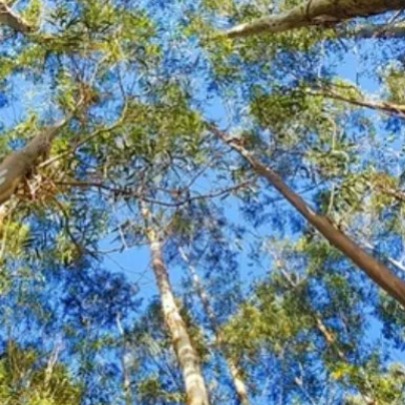
In the sixties, forestry managers thought that eucalyptus was the solution to repopulate and supply the paper industry. The reality is that decades later this species, which already covers 30% of the forest area of Galicia, is destroying the local birdlife and the biodiversity of the forests of the northwest of the peninsula. This is the invasive tree that is destroying the local birdlife. A study by the University of Santiago de Compostela and the CSIC, published in the journal Forest Ecology and Management, confirms that eucalyptus plantations are home to many fewer species and specimens of birds than native forests. The researchers Fernando García-Fernández, María Vidal and Jesús Domínguez, together with Adrián Regos from the CSIC Biological Mission of Galicia, compared 240 patches of native and eucalyptus forest in the Fragas del Eume Natural Park. Eucalyptus arrived in Spain in the 19th century but its large-scale exploitation skyrocketed in the 20th century to supply the paper industry. Today it covers more than 30% of Galicias forest area and has transformed the landscape into what science calls a "green desert": a plant mass that looks like a forest but is not. Under its cover no birds nest, no undergrowth grows and the insects that feed the local fauna do not thrive. The mechanism is allelopathy. Eucalyptus releases chemicals that prevent the growth of other plants under its canopy, eliminating native shrubs and drastically reducing insect populations. Without insects there is no food for insect-eating birds. Added to this is that eucalyptus trees are cut down in cycles of between 10 and 15 years, which prevents the trees from aging and forming the natural cavities that many species need to nest. The scientific committee of the Ministry for the Ecological Transition recommended including the eucalyptus in the Catalog of Invasive Exotic Species in 2017. The proposal was rejected due to its economic weight. of the forestry sector. Galicia and the Basque Country have applied temporary moratoriums on new plantations, but the species continues to expand. What are the main species that are disappearing due to eucalyptus? Insectivorous forest birds are the most affected. Without undergrowth or native insects, species such as the common myth, the common wren, the tit, the Eurasian treecreeper and the chaffinch lose their food source and abandon the eucalyptus areas. Birds that nest in hollows also suffer the impact. Great woodpeckers, woodpeckers and nuthatches need old trees with natural cavities to build their nests. Eucalyptus trees, cut down before they mature, never develop these structures. The damage also extends to the aquatic environment. Dry eucalyptus leaves fall into rivers and release oils and toxic compounds that alter the river food chain. The palmate newt and the larvae of caddisflies and mayflies, the food base of river fish, suffer direct effects from this toxicity. Researchers from the USC and the CSIC propose incorporating strips of vegetation free of eucalyptus within the plantations so that the native flora can recover and the insectivorous birds can once again control the pests naturally.