Why a 2,600-year-old Patagonian tree is one of the most valuable natural archives in the southern hemisphere
At 57 meters high and 220 centimeters in diameter, the most documented larch in Argentina is also a precision scientific tool
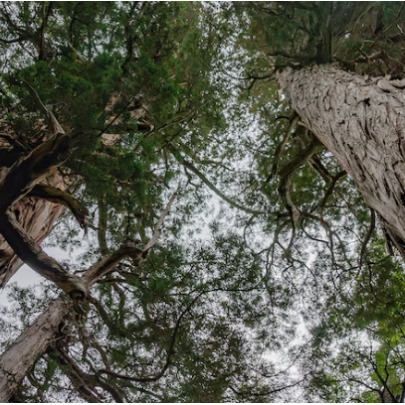
In Argentine Patagonia, within the Los Alerces National Park (Chubut), there is a specimen of larch (Fitzroya cupressoides) that is among the oldest documented in the country. The species is key to dendrochronology: its rings allowed climatic reconstructions of thousands of years and support part of the scientific evidence on the thermal history of southern South America. The record released by the Gymnosperm Database (Conifers.org), a botanical reference database on conifers, describes the largest specimen officially documented in Argentina at 2,600 years old, 57 meters high and 220 cm in diameter at breast height. It is in the vicinity of Puerto Sagrario, on the northern arm of Lake Menéndez, in the Los Alerces National Park, where regular visits to the larch are organized. The figure of 2,630 years that circulates in some publications is generally linked to estimates and tourist communications about the Grandfather, the name with which the best-known tree on the circuit was popularized, according to the official portal of the Argentine State. But what surprises science is not only the age. The Patagonian larch is a natural archive: each growth ring records environmental conditions of a specific year. For this reason, research teams use it to reconstruct climate, fires and natural variability of the Andean-Patagonian system with an annual precision that is difficult to match by other sources. A protected giant in Los Alerces The alerce — also known as lahuán in the area — grows in sectors of high humidity, with cool summers and cold winters, between temperate forests in southern Chile and Argentina. In Los Alerces National Park, its presence is not a detail of the landscape: it is part of the reason for the conservation of the area and one of the reasons why the destination became a reference for nature tourism in the region. The protection of the larch is not symbolic. Historical pressure on the species – mainly due to the value of its wood – led to severe restrictions on its use. In Chile, for example, Conifers.org points out that logging was officially stopped in 1976. Why its rings changed the way we study the climate The scientific relevance of the larch was consolidated for a specific reason: it can live for millennia and its growth rings function as a continuous record. This combination makes Fitzroya cupressoides a key species for constructing long series of environmental reconstruction in the southern hemisphere. A study published in Science by Antonio Lara and Ricardo Villalba used larch rings to develop a reconstruction of summer temperatures with an annual resolution of 3,622 years in southern South America. This work is a recurring reference to explain why this species provides climatic signals that are comparable between years and useful for long-term analysis.