How two ancient agricultural techniques are restoring health to European soils
A review of 45 scientific studies documented up to 70% increases in moisture retention, a 53% reduction in erosion, and a 29% growth in microbial biomass.
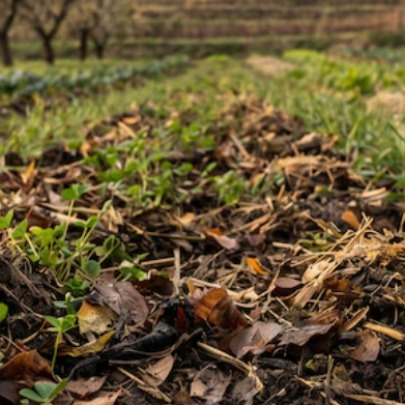
The use of cover crops and mulching techniques is transforming the way European farmers care for the health of their soils. A recent analysis published in the scientific journal Frontiers in Sustainable Food Systems by a group of researchers from Educons University, Serbia, shows that these practices, typical of regenerative agriculture, provide multiple benefits to the structure, dynamics and fertility of the soil, keys to the sustainability of food production. Mulching is a technique used in agriculture and gardening that involves covering the surface of the soil with organic materials - such as leaves or compost - or synthetic materials, with the aim of conserving moisture, protecting against erosion, regulating temperature and limit the development of weeds.For more than a decade, the continuous application of these strategies in various agricultural systems, from almond orchards to vineyards and cocoa plantations, demonstrated their potential to curb the degradation of the soil resource. According to the authors, the improvement is observed in both physical stability and in chemical and biological processes, which directly impacts the productivity and resilience of crops in the face of extreme climate events.Cover crops: measurable improvements in structure and water retentionOne One of the most compelling data from the study is the increase in porosity and water retention capacity in soils managed with cover crops and mulching. In systems that incorporated these techniques, soil moisture increased between 50% and 70%, while erosion was reduced by up to 53%. The researchers detail that, after ten years of application, the soils capacity to retain water grew between 4% and 7%, improving root access to nutrients and reducing vulnerability to drought. In the case of almond trees and rotation crops such as cotton and corn, the presence of deep roots favored the infiltration of water and its storage in the first 30 centimeters of the soil profile. In addition, the use of surface mulching helped to stabilize the soil microclimate, maintain humidity and reduce sudden changes in temperature. The Educons University team highlights that the integrated management of cover crops, mulching and reduction of tillage generates a more robust structure, with greater stability of aggregates both on the surface and in depth.