What is lost when forests disappear: the invisible impact that goes beyond clearing
Each clearing leaves much more than an empty landscape; essential functions to regulate the climate, store water, protect biodiversity and sustain production and daily life are also lost.
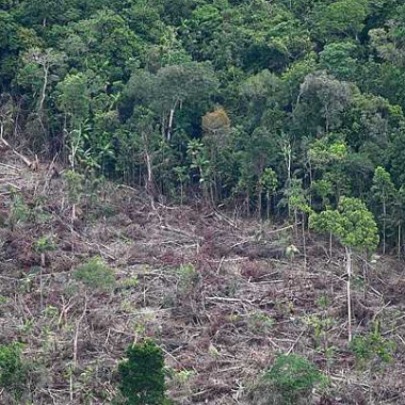
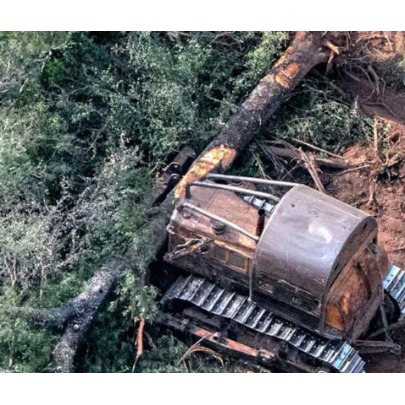
In 2025, northern Argentina lost 210,702 hectares of native forest between clearings and fires, 40% more than the previous year, according to Greenpeace Argentinas annual report prepared from satellite images. Of that total, 94,204 hectares corresponded to clearings carried out with machinery in Santiago del Estero, Chaco, Salta and Formosa, while 116,498 hectares burned in forest fires. The data is part of a long-term trend: Argentina had around 35 million hectares of native forest in 1987 and, according to official data from the National Forest Directorate, it lost nearly 7 million hectares between 1998 and 2024, which places it among the 15 countries with the greatest forest loss in the world. This accounting is necessary, but it is not enough to explain the full impact. A forest is not just a group of trees or a reserve of wood. It is a natural infrastructure that works all the time, even when no one sees it: it captures water, moderates temperatures, conserves soils, stores carbon, houses species and maintains processes that end up influencing food production, water availability, the frequency of floods and the quality of life in cities that may be hundreds of kilometers away. This set of benefits is known as ecosystem services. The concept was disseminated by the Millennium Ecosystem Assessment, an international study promoted by the United Nations (UN) to measure how changes in ecosystems affect human well-being. The definition left by this work is simple: they are the benefits that people obtain from ecosystems. In concrete terms, these services include what nature provides directly, such as food, wood, fibers, water or plants for medicinal use; what it regulates, such as climate, river flooding, erosion, pollination or air quality; and what it sustains, such as soil formation, nutrient cycling and the habitats where biodiversity lives. They also incorporate cultural, recreational and symbolic values ??linked to the landscape and ways of life. The difficulty is that many of these services have no visible price. They do not appear on an electricity bill, in the cost of a home or in the final value of a food item. However, when they deteriorate, the cost is transferred to other places: more expensive containment works, losses due to flooding, lower soil productivity, decline in pollinators, increased local temperatures, problems in water supply or loss of resources for communities that depend on the forest for their daily lives. The environmental loss, then, is not confined to the place where the clearing occurred. The services that are not seen For Alejandro Brown, president of the ProYungas Foundation, forests must be understood within a broader framework of natural ecosystems, along with grasslands, wetlands and shrubs. Forests, like other natural ecosystems, provide a series of environmental services. They participate in climate regulation, evapotranspirate, generate humidity, contribute to the formation of microclimates and also fulfill a thermal regulation function, Brown explained. Forests fix carbon. They sequester part of the carbon released by agroindustrial activity and cities, and accumulate it in the trunks and in the soil. Therefore, when a forest is converted, not only is this accumulation interrupted, but when using or burning that wood, part of that carbon is also released, said the president of the ProYungas Foundation. In the Yungas of northwest Argentina, where fog is part of the environmental regime, forest cover fulfills another function. In mountainous regions, forests play an important role in water regulation of basins. They help promote the percolation of water during rains, reduce surface runoff and make the growth of streams and rivers less abrupt, Brown said. And he added: In northwest Argentina, where there are cloud forests and frequent fog, the forest helps capture and filter that water, which then goes on to swell streams and deep water tables. Biodiversity is another service that is usually reduced to an image of emblematic species. But the functioning of a forest depends on visible and invisible organisms: birds, mammals, insects, fungi, soil microorganisms, pollinators and natural pest controllers. Loss of coverage doesnt just eliminate individuals; It also fragments relationships. When a habitat is reduced, corridors, refuges, breeding sites and food sources decrease. This alteration can affect crop pollination, biological control of insects and soil fertility. Brown also focused on the link between forests and communities. In communities that live associated with the forest, an important part of them indigenous, both in Patagonia and in the great north of Argentina, forests generate many things. They provide species that are used for health, resources for informal economies, production of handicrafts, wood or sticks for rural constructions, fire, charcoal and raw materials for daily life, he stated. The forest law, passed in 2007, was a central tool to organize the conservation of native forests through protection categories. However, its implementation coexists with tensions between conservation, production, financing, supervision and provincial decisions. The forest law was important to give visibility and value the forests in Argentina, but the law is not enough. To conserve forest cover, tools are needed that allow other productive activities to see conservation as a tool that enhances their sustainability and that this is valued by the market, Brown said. Beyond the trees Nadia Boscarol, biologist and coordinator of Fundación Humedales/Wetlands International, suggests that wetlands enter the conversation with less public recognition than forests, although they fulfill decisive functions for water, carbon and biodiversity. Forests have good press. Everyone knows what a forest is, that they produce oxygen and that they are threatened by the advance of the agricultural frontier. Its importance for carbon capture is also recognized. In short, they are often called the lungs of the planet, Boscarol said. Something different happens with wetlands: in the collective imagination they are associated with swamps, swamps and mosquitoes. For hundreds of years they were filled in or dried to become land suitable for agriculture or urbanization, he added. Wetlands must be valued for the functions they perform as flood regulators. They act as sponges that retain water in cases of extreme rainfall and river overflows, and prevent it from accumulating in low planted or urbanized areas. They are also reservoirs of fresh water and contribute to its purification, explained the coordinator of Fundación Humedales/Wetlands International. International data show the scale of this transformation. The Global Wetland Outlook 2025 report, known by its name in English Global Wetland Outlook 2025 and prepared within the framework of the Convention on Wetlands, estimated that 22% of the worlds wetlands have been lost since 1970. The same report warned that its deterioration compromises benefits associated with water, flood protection, carbon, food production and livelihoods. Boscarol highlighted that these environments are habitat for a relevant portion of the planets species. Wetlands are habitat for approximately 40% of the worlds species and 12% of all animal species. More than 40% of fish species are freshwater and find a permanent habitat or a place to complete part of their life cycle in wetlands. Some 4,000 species of amphibians also depend on wetlands for their subsistence, he noted. In climatic terms, wetlands store a significant part of terrestrial carbon, particularly in peatlands, mangroves, marshes and other systems where the accumulation of organic matter is maintained for long periods. Wetlands help regulate the climate because they store carbon and protect against the increasingly serious impacts of global warming," said Boscarol. He added: "It is not about comparing whether forests or wetlands are more important for life on the planet, but rather recognizing the need to conserve both. The metaphor that Boscarol proposes aims to explain a function that is often noticed late. Wetlands cannot be compared to organs like the lungs or the heart, but they are undoubtedly the kidneys of the planet: we ignore them until they begin to fail and we suffer the consequences of not having taken them into consideration, he stated. Cant you see it from afar? The impact of deforestation is not limited to the territory where it occurs. Studies from the Andean Amazon Monitoring Project (MAAP), of the Amazon Conservation organization, describe the phenomenon of “flying rivers”: enormous volumes of water vapor generated by the evapotranspiration of the Amazon rainforest that travel through the atmosphere towards the south of the continent and condense in the form of rain over Paraguay, northern Argentina and the Río de la Plata basin. This flow of moisture is one of the factors that sustains the availability of water for agriculture in the Pampas region, according to a report by the World Wide Fund for Nature (WWF) on the crisis in the Amazon rainforest. The reduction in forest mass reduces the number of trees available to sustain this cycle, which, according to the MAAP analysis released in 2025, intensifies droughts in different parts of South America, particularly during the dry season. In Argentina, this mechanism is combined with another more direct one: the loss of forest cover in the headwaters of the basin reduces the capacity of soils to retain rainwater, which increases surface runoff and can often aggravate floods in low areas located downstream. far from the region where the clearing occurred. Added to this is the effect on greenhouse gas emissions: according to the Greenpeace Argentina report, the agricultural sector and changes in land use represent about 38% of national greenhouse gas emissions, a proportion that connects regional deforestation with the global climate discussion assumed by the country at the 2021 Glasgow Summit, where it committed to achieving zero deforestation by 2030. This scenario occurs in a context of debate on the main forest protection instrument of the country. On December 9, 2025, the May Council—the dialogue space made up of national government officials and governors—released a proposal to modify Law 26,331, which, according to organizations in the forestry sector and environmentalists, would reduce the level of current protection, among other points, by eliminating the mandatory prior authorization for clearing in areas classified in the category of least restriction. The initiative generated the rejection of entities grouped in the Roundtable of Self-convened Forestry Organizations, among which the Chaco Agroforestal Network (REDAF) participates. In addition, it prompted a presentation by Greenpeace Argentina before the Supreme Court of Justice, in which the organization warned that 80% of the clearings recorded in 2025 in Santiago del Estero were carried out in areas where current law prohibits deforestation.