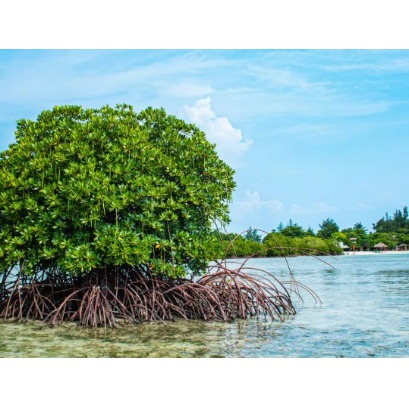
The tree that grows in Latin America floating in the middle of the sea: it desalinates the water and protects the coasts
It is an ecosystem that grows between land and salt and protects the coasts of Latin America while filtering the salt and supporting marine life. The Latin American region holds one of the greatest natural wealth on the planet. Its not just biodiversity, its a living system that expands in unique ways, with record-breaking trees and species that only exist in this corner of the world.
Among them are mangroves, forests that grow in the transition between land and sea, in tropical and subtropical areas, especially in Latin America. They are not ordinary trees, they are species adapted to extreme conditions, capable of surviving where almost nothing else can. Therefore, its conservation is vital. The tree that grows in Latin America floating in the middle of the sea: desalinates the water and protects the coasts These ecosystems play a silent but fundamental role in Latin America. They protect the coasts from erosion, acting as a natural barrier against the advance of the sea. Their roots, which rise and sink in salt water, a rare feature in trees, trap sediment, stabilize the soil and reduce the impact of storm surges. But their importance does not end on the coast. An incredible network of life is sustained within the mangrove trees. They are a refuge, breeding area and food for hundreds of species. Crabs, shrimp, oysters, crocodiles, snakes, turtles and a great diversity of birds coexist there, in a natural balance that seems fragile, but is deeply resilient. The importance of these trees for the planet Mangrove trees also have a unique capacity: • they tolerate high levels of salinity in the soil • they filter water naturally • they absorb large amounts of carbon dioxide. This makes them essential allies in the face of climate change, often underestimated, but fundamental for the balance of the planet. These Forests extend along much of the coasts of Latin America. There are more than 50 species of mangrove in the world, and Mexico stands out among the five countries with the largest extension, distributed in its 17 coastal states, which represents approximately 5% of the global coverage. Among the main species are the red mangrove (Rhizophora mangle), the white mangrove (Laguncularia racemosa), the black mangrove (Avicennia germinans) and the button mangrove (Conocarpus erectus).