CONICET researchers determined the impact of the Andean-Patagonian forest fires on bodies of water
Forest fires in Andean-Patagonic forests, in addition to producing transformations in vegetation and fauna, also reach rivers and streams, where the quality of water and the functioning of aquatic ecosystems can be altered. Understanding how these bodies of water respond after fire is key to evaluating the impacts of these events and designing management strategies that contribute to the conservation of biodiversity and ecosystem services associated with water resources.
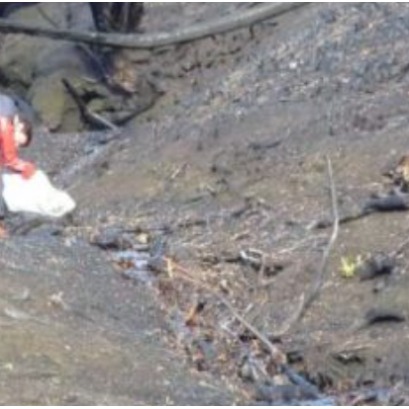
A research team from CONICET, from the Esquel Mountain and Patagonian Steppe Research Center (CIEMEP, CONICET-UNPSJB), in collaboration with researchers from the Chemistry laboratory of the INVAP company, analyzed how a large forest fire that occurred in 2021 in Argentine Patagonia affected the water quality and nutrient dynamics of streams in burned basins for 28 months after the event. This scientific contribution, made by Cecilia Brand, Yanina Assef and collaborators, was recently published in the specialized journal Science of The Total Environment. It highlights the importance of understanding the effects of fire on headwater rivers and streams: These ecosystems not only constitute an essential source of water supply for numerous communities, but also support multiple economic and productive activities in the Andean-Patagonian region, comments Assef. This large-scale forest fire originated near the towns of Las Golondrinas and El Hoyo in the province of Chubut and affected more than 13 thousand hectares of Patagonian Forest. According to specialists, despite The fact that this event caused significant environmental losses, including extensive forested areas and wildlife, also represented a unique opportunity for the development of this work. To evaluate the effects of the fire, the team compared four streams affected by the fire with four other reference streams that were not reached by the flames and present similar environmental characteristics. Along the same lines, Brand details that the sustained increase in nitrates in the water is due to the fact that nitrogen transformation processes remain active, but that the ability of the burned vegetation to absorb nutrients is drastically reduced. This effect is proportional to the surface of the basin affected by the fire. In the first sampling we also detected an increase in some heavy metals. What was striking was that this increase appeared in all streams, not just those that had been affected by the fire. The particles generated by combustion were probably transported by the wind and were deposited relatively uniformly throughout the area, indicates Assef. In this context, the geographical proximity of CIEMEP to the affected area, added to the availability of vehicles, laboratories and specialized equipment, was key to carry out periodic monitoring and obtain valuable information on how aquatic ecosystems respond after a fire, highlights Brand. The study allowed us to identify and understand the so-called disturbance window - critical temporal period immediately after the fire characterized by high vulnerability. environmental-, which generally begins with the first rains after the fire. At this stage we observed very marked increases in electrical conductivity and in the amount of suspended solids that were evidenced as an increase in the turbidity of the water in the burned streams, says Assef. The researcher adds that, during this initial period, phosphorus concentrations became up to 17 times higher than those of the reference sites. Subsequently, as phosphorus levels began to decrease, we observed a sustained and very important increase in nitrogenous compounds, especially nitrates, a trend that was maintained until the end of the study, he points out. Furthermore, he highlights that, although forest fires represent one of the main disturbances that affect the region and cause severe social, economic and environmental consequences, the impact of these events on water quality continues to be a poorly studied aspect, both in Patagonia and in Argentina in general. We began field work in June 2021, just two months after the fire was extinguished, and since then we have maintained continuous monitoring that extends to today, although the published article shows results from the first three years, explains Assef. Effects of fires on aquatic ecosystems Like what has been reported in other parts of the world, the specialists maintain, it is observed that the effects of forest fires on the aquatic ecosystems of the Patagonian region vary depending on the extent and severity of the fire, the dimensions of the stream, the topography and the type of vegetation cover. Furthermore, the most recent fires, such as those that occurred in the Los Alerces National Park (Chubut), in the years 2024 and 2026, give the opportunity to continue their studies to answer other questions that were generated from the first investigations. Assef and Brand highlight that these results alert about possible modifications in ecosystems on a larger scale: The high increase in nutrients sustained over time can have consequences on the health of the ecosystem, modifying trophic webs and ultimately being able to affect the quality of water for consumption. And they warn that these changes can be aggravated if they are combined with other activities that provide nutrients to the body of water or that make the regeneration of riparian vegetation difficult. We have to take into account that as populations grow and inhabited areas expand into natural areas, forest fires increasingly affect basins used as sources of water for human consumption, Brand points out. And he concludes: “This makes the Regular monitoring of water quality is an essential tool to identify possible impacts of fire and guarantee the health security of communities.