Beyond ecocide: forest science defends the role of cultivated and natural forests to reverse the planetary imbalance
The debate on the forestry monoculture model in Corrientes has added a new environmental, technical and political chapter. On May 27, 2026, the International Tribunal for the Rights of Nature issued a final verdict in which it classified the forestry activity of exotic species in the province of Corrientes as an ecocide. From the perspective of this civil organization, the large extensions of planted trees threaten biodiversity and regional sustainability, under the premise that "pine and eucalyptus monocultures are not forests."
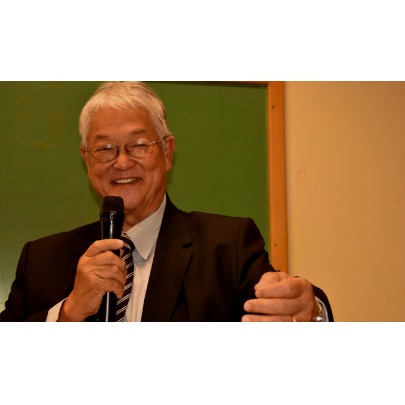
Ecocide is defined as serious, massive or prolonged damage to ecosystems, which negatively affects biodiversity, climate and human health. Internationally, it is defined as any illegal or arbitrary act committed knowing that there is a high probability of causing severe and lasting damage to the environment. This resolution arises precisely in a context of strong public promotion, where the Corrientes State has been announcing industrial investments of historical scale for wood processing and fluft cellulose production. Faced with this polarization between the demands of the ecological and peasant sectors, and the economic expansion of the sector, global forestry science offers an integrative approach that breaks down the superficial antagonism between native forest and cultivated forest. Dr. Roberto Hosokawa, a prominent academic from the Federal University of Paraná (Brazil) and Honoris Causa Doctor from the National University of Misiones (UNaM), opportunely analyzed the physical and biological laws that support the activity, providing an overcoming perspective based on decades of mathematical modeling and global thermodynamics.Why every tree countsThe scientific basis that Dr. Hosokawa uses to support the coexistence of both systems is based on the Second Law of Thermodynamics (entropy), an area of macrocosmic research that was bequeathed to him by his doctoral co-referent in Germany, the famous Romanian scientist Michael Prodan (a pioneer in calculating the limits of humanitys growth for the United Nations).For humanity, both natural forests and Monocultures are important, since both are part of the only existing process on Planet Earth to reverse any imbalance, and maintain with planning an ecological and economic environment through trees, stated Hosokawa. The specialist explained that both native stands and commercial plantations result from the process of photosynthesis, which acts as the only planetary mechanism capable of capturing energy and mitigating global warming, carbon dioxide saturation and resource depletion. From this macro perspective, the famous phrase that Prof. Prodan transmitted to him in his youth is totally valid in the Corrientes scenario: In the balance of the economic and ecological environment through the forest, only plastic trees are not worth it. Differentiated functions: genetic preservation vs. productive efficiencyFor the academic, the error of the recurring debate would lie in evaluating industrial plantations under the same functional parameters as a native forest, when in reality they fulfill complementary roles in the fabric of the biosphere: Natural forests (Preservation): They must be considered intangible sources of information and biodiversity. "They should be preserved and touched only for research purposes," Hosokawa explained. Those that are degraded must be urgently recovered, either to form legal reserves or to be managed exclusively to obtain high added value wood. Reforestation (economic and chemical sustainability): Pure or mixed crops operate as efficient biological factories destined for the production of wood, resins, cellulose, energy and massive carbon storage. "They are sustainable if they were installed in forest-based structures with sustained yield," he noted, demystifying the concept that planned production is inherently destructive. Territorial planning guided by science, not by controversy Far from validating alarmist environmental visions or extreme corporate positions, Dr. Hosokawa proposed as a way out of the conflict between industrial development with forestry monocultures and environmental protection that "is not achieved by canceling the activity, but through rigorous management." of forest management. "The technical proposal consists of designing a strict spatial zoning that clearly delimits urban areas, industrial hubs, logistics networks, natural preservation forests, grasslands, agricultural crops and forest production massifs. The proportion of each space must be defined by society, in its territorial planning, but based firmly on technical and scientific knowledge under the coordination of multidisciplinary academics," concluded the professor, making it clear that planned afforestation, far from being an ecocide, It is an indispensable biological ally for the survival of the human species. The figures of forestry scientific research The theoretical framework and background that support Dr. Roberto Hosokawas conclusions are summarized in the following academic reference data: Year 2001 (Vol. 31): Date and edition of the scientific journal Floresta (ISSN 0015-3826) where the researcher published for the first time the statistical mathematical formula aimed at calculating the effects of entropy in living systems. 4th Mass most significant: The position that the global forest resource occupies on Planet Earth in terms of macrocosmic impact, being located immediately after the atmosphere, the hydrosphere and the lithosphere, according to the physical studies cited by the specialist.2 Complementary systems: The integrated management scheme (Permanent preservation for natives and sustained yield for cultivated forests) required to balance the regional economy with the ecological stability of the NEA.