The biological gold mine as a competitive advantage: Argentina produces wood 9 times faster than Europe, but it lacks the industry to process it
The Argentine forestry sector faces a historical contradiction: it has unique biological advantages on the planet, but is tied by the lack of industrial investment, informality in commercial and labor information, and legal uncertainty. This was the central axis of the presentation by agronomist Daniel Maradei, director of the consulting firm Maradei y Asoc., during the hybrid seminar organized by the Agriculture and Food Commission of the Argentine Center of Engineers (CAI) in Buenos Aires, which had the institutional support of the Professional Council of Agronomic Engineering (CPIA) and the participation of engineer Luis María Mestres, secretary of Forestry-industrial Development.
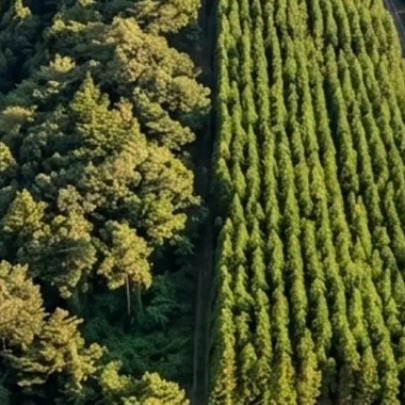
During his presentation, Maradei defined Argentina as a biological gold mine for the international market, based on the very high productivity of the land, the availability of water and an advanced genetic development that allows growth rates that are impossible to match for the traditional forest powers of the northern hemisphere. The super power of the NEA The average forest growth data presented by the consultant exposes an unbeatable natural advantage. While the Scandinavian countries - historical dominators of the wood and paper market - face extreme winters and cutting cycles of between 60 and 80 years, the Argentine Northeast (NEA) operates at record speeds. At a global level, the measurement of cubic meters per hectare per year (m3/ha. year) exposes the following differences: Finland: 5 m3/ha. yearSweden: 6-7 m3/ha. yearSouthern US: 11 m3/ha. yearChile: 21 m3/ha. yearUruguay: 26 m3/ha. yearBrazil: 41 m3/ha. yearNEA Argentine (Corrientes and Misiones): 46 m3/ha. YearIn Misiones or Corrientes, a pine or eucalyptus reaches commercial size in just 12 or 15 years. We produce almost nine times faster than Finland, Maradei graphed. However, the analyst fired a harsh metaphor about the state of the activity: Nature in Argentina moves at the speed of a Formula 1, but the industry and the local economy move at the speed of a cart. The map of the forest mass: between the native and the implanted When addressing the inventory of resources, Maradei warned about the lack of updated and precise official statistics. Regarding native forests, estimates vary substantially: in 2005, the former Ministry of Environment estimated about 31.4 million hectares, a figure that rose to 53.6 million in 2007 after the implementation of the Forest Law (No. 26,331). On a regional scale, the Chaqueño Park leads with 62 million hectares, followed by the Monte ecosystem (47 million), the Espinal (33 million), the Andean forest Patagonian (6 million), the Tucumán-Bolivian Jungle (5.4 million) and the Misionera Jungle, which exceeds one and a half million hectares with species of high timber value such as guatambú, palo rosa, peteribí and cedar. Today the productive activity with the native forest is reduced to a smaller scale, concentrated on the export of charcoal, tannin and quebracho extract, he detailed. On the side of the planted (cultivated) forests, the panorama Statistical data from the National Directorate of Industrial Forestry Development is more solid: the country has 1,364,998 hectares, of which 30% correspond to mature forests over 18 years old. The provincial podium for forestry crops is led by Corrientes, with 492,000 hectares (70% pine and 30% eucalyptus), consolidating itself as the most attractive and friendly place to attract new forest-based investments. In second place is Misiones, with more than 400,000 hectares (80% pine); a province with a very consolidated industrial hub but where current environmental restrictions make the projection of macroprojects complex. The third place on the podium is occupied by Entre Ríos, highlighted by its eucalyptus and salicaceae basins, towards the Delta. The regional paradox: the mirror of Uruguay, Chile and Brazil The most critical fact of the conference emerged when contrasting the availability of resources in Argentina against the commercial performance of its neighbors in the Southern Cone. Argentina has 1.3 million hectares planted, exceeding the 1.1 million hectares that Uruguay has. Despite having more trees, the economic impact is the opposite: Argentina exports only between 380 and 550 million dollars annually, while Uruguay generates between 2,500 and 2,800 million dollars. The explanation for this gap lies in the mega pulp mills that were established in Uruguayan territory and that process almost 5 million tons annually. «Uruguay industrialized its forest and exports high-value biomass; Argentina was stuck below one million tons of pulp and exports unprocessed logs or products with low added value," stated Maradei. The lag is even greater compared to the regional leaders: Chile, with 2.1 million hectares, diversified its matrix into panels and sawn wood, billing up to 6,000 million dollars in exports. Meanwhile, the giant Brazil operates on another scale with 10 million hectares planted and external sales of up to 15 billion dollars annually. In Argentina, an average of 35,603 hectares are cut annually (about 350 m3 per hectare), which is equivalent to the consumption of a single modern pulp mill in Brazil. This demonstrates the enormous supply of surplus solid wood and the strong deficit of industries capable of energizing the productive cluster, he pointed out.