Brazil recorded the lowest number of deforestation of the Atlantic forest in 40 years
Studies have revealed that the felling of trees in forests in the south of the nation reached the lowest number in four decades
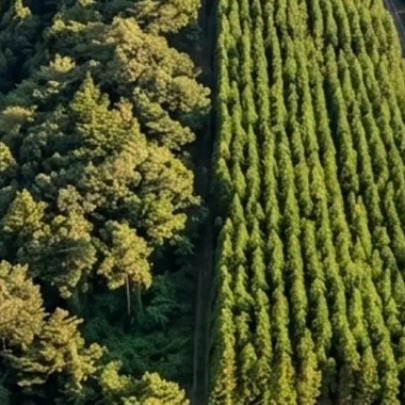
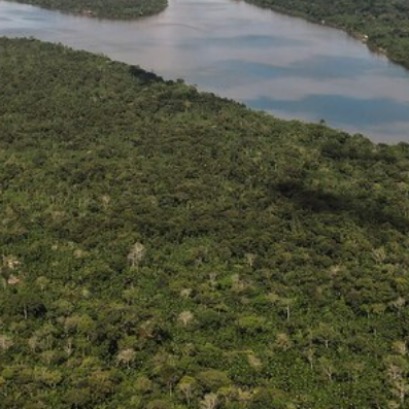
Over the last three decades, Brazils Atlantic forest has suffered a continuous process of deforestation that has significantly transformed its landscape and ecological structure. Although native forest coverage has remained relatively constant, around 28 to 30 million hectares between 1989 and 2018, this apparent balance hides a strong internal dynamic: the loss of the oldest and most biodiverse trees has been compensated in surface area by the increase in young specimens, which do not offer the same environmental services or harbor the same biological wealth. Between 2000 and 2015, the annual loss of ancient forests ranged from 220,000 and 80,000 hectares, a Science Advances study reported. In 2015, the minimum of this series was detected, with 76,200 hectares lost that year. However, replacement by younger forests has resulted in a progressive rejuvenation of forest cover. Currently, about 11% of the Atlantic forest is made up of young vegetation, and a third is less than 10 years old. The advance of agriculture and commercial plantations has been the main driver of deforestation, with the cultivation of soybeans, sugar cane and coffee expanding rapidly. In the last 40 years, the Atlantic forest lost 2.4 million hectares of native vegetation according to data from Agencia Brasil, which is equivalent to a reduction of 8.1% compared to the area recorded in 1985. Currently, the region only conserves 31% of its original vegetation, and approximately half of the recent deforestation affects areas more than 40 years old, which are key for biodiversity and carbon storage. The smallest deforestation in Brazil in 40 yearsThe Atlantic forest of Brazil has recorded a historic decrease in deforestation levels, reaching its lowest figure in four decades in 2025: 8,658 hectares deforested, according to a report by SOS Mata Atlântica. It is the first time since 1985 that the loss of forest cover falls below 10,000 hectares annually. This biome, the most populated in the country and home to 80% of the Brazilian population, includes large cities such as Rio de Janeiro and São Paulo. The positive results have been received with optimism by environmental organizations, which consider it possible to achieve zero deforestation in the coming years if the trend continues. However, significant downside risks remain. The main threats include the approval in Congress of the so-called “devastation bill”, which weakens environmental legislation, and the possibility of a political change towards a government less committed to environmental protection in the presidential elections in October. The 40% decrease in deforestation between 2024 and 2025 was confirmed by two different data sets, both prepared in collaboration with non-governmental organizations. However, the NGO warns that deforestation remains high and points out that each fragment of lost forest has a considerable impact on this biome, which only retains 24% of its original forest cover. A key element of the downward trend has been public pressure, social mobilization and the application of environmental policies and control measures. Despite this scenario, the new environmental law, which eliminates the need for prior federal approval to authorize deforestation and transfers that power to local authorities, represents an unprecedented setback since the 1980s. Although President Luiz Inácio Lula da Silva attempted to veto parts of the law, Congress overruled those vetoes, leaving the constitutionality of the rule in the hands of the supreme court. Ecological restoration initiatives Brazil has launched an ambitious large-scale forest restoration system in the Mata Atlántica, with the aim of recovering 15,000 hectares of degraded lands in the north of the state of Rio de Janeiro, reported TV Brics. This initiative, considered a milestone in environmental sustainability and climate action, integrates ecological recovery with regional economic development. The restoration focuses on protected areas and follows national environmental regulations aimed at preserving biodiversity. The program, supported by the National Bank for Economic and Social Development (BNDES), is part of the Forest Strategy, which combines financial and technical tools to promote both ecological regeneration and the bioeconomy. Between 2023 and 2025, this initiative mobilized around USD 1.4 billion, with the potential to plant 280 million trees, generate 70,000 jobs and capture 54 million tons of carbon. The project, cited by TV Brics, contemplates the creation of more than 800 direct jobs in nurseries, seed collection and forest maintenance work, thus contributing to strengthening climate resilience and protecting natural habitats. As an example of ecological advances, the reproduction of the scarlet macaw has been recorded in the Atlantic Forest for the first time in almost 200 years. Environmental authorities highlight that the return of this species, key to seed dispersal and forest regeneration, reflects a positive trend in the restoration of the ecosystem and the strengthening of biodiversity.