South America had the greatest loss of forests on the planet in the last decade
South America and Africa led the global decline, with annual losses of 4.10 and 2.96 million hectares of forests. In South America, 10 million hectares of primary forest are included.
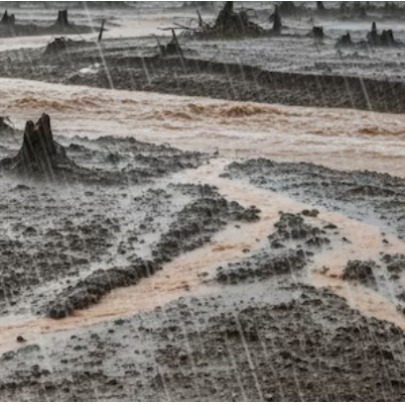
South America has been the epicenter of forest loss in the world during the last decade, despite years of international commitments, according to a United Nations report that records the disappearance of at least 41 million hectares of forest in the region, an average of 4.10 million a year. The figure includes 10 million hectares of primary forests that constitute ancient, dense and difficult to replace ecosystems, essential for the conservation of biodiversity, the storage of carbon from the atmosphere and the regulation of the climate.Between 2015 and 2025, the forest balance showed a marked regional disparity. South America and Africa led the global decline, with annual losses of 4.10 and 2.96 million hectares, respectively, while Asia (+1.62 million), Europe (+1.43 million) and Oceania (+140,000) recorded net gains in their forested area. UN News recently reported that the United Nations warned that the world is still far from stopping and reversing deforestation by 2030. It warned that forests continue to disappear at a worrying level, under pressure from agriculture and urbanization, in a process aggravated by climate change and that, at the same time, contributes to its acceleration. Forests are among the most vital natural resources on our planet, said the Secretary General of the United Nations, António Guterres, warning that these ecosystems face growing threats derived from deforestation, rising temperatures, economic uncertainty and geopolitical divisions. Forests under increasing pressure and absorbing less carbonIn a report, the international organization exposes the gap between political commitments and reality on the ground. The goal of increasing the global forest area by 3% by 2030, established in the United Nations Strategic Plan for Forests, remains off course. Although the loss of primary forests was significantly reduced compared to the previous period, according to UN data, these ecosystems continue to disappear at a rate of 1.61 million hectares per year. The United Nations warned that, even if forests are reforested, they will not be able to reproduce their biodiversity nor will they have carbon storage capacity in the short term. Among the main causes, the UN mentions agricultural expansion, the main driver of deforestation worldwide, driven by the demand for food, livestock, cash crops and firewood that continue to push the forest frontier in regions of Africa, South America and Asia. At the same time, urban growth, infrastructure development and population growth have an influence, increasing pressure on forests. Added to these human pressures is climate change, which makes forest fires, droughts, heat waves, pests and diseases increasingly more frequent, affecting forest ecosystems more and more, even in regions where deforestation has stabilized. The UN warns that the carbon-absorbing function of these ecosystems is weakening. Although global investment in sustainable forest management amounted to $84 billion in 2023, this figure is insufficient compared to the $300 billion annually required to meet the 2030 goals. This financial gap hits low- and middle-income nations hardest, where resource scarcity and growing economic pressures complicate protection of ecosystems that are under constant threat. Although the report highlights a positive trend, with a growing number of nations incorporating forest protection into their development plans and reinforcing global restoration commitments, the overall balance remains discouraging. The gap between ambition and reality is evident: of the 26 forestry goals under evaluation, only seven show solid progress, the UN said, specifying that two of the most important (reversing forest loss and eradicating extreme poverty among populations who depend on them) remain off course.