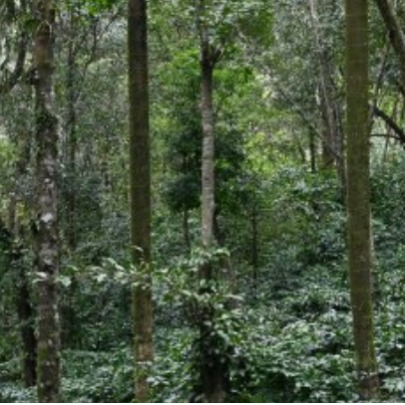
Global forest area decreased by 41 million hectares between 2015 and 2025
The rate of loss is 4.12 million each year, higher than the period 2000-2015, but lower than the 10.7 million from 1900-2000. The reduction included 16 million hectares of primary forests, those with no obvious trace of human activity and of great importance for biodiversity. The global forest area decreased by more than 41 million hectares, close to 1%, between 2015 and 2025, with South America (-4.61%) and Africa (-4.28%) as the regions with the most pronounced losses.
The rate of loss, 4.12 million hectares each year, is greater than that of the period 2000-2015, when 3.68 million hectares were lost annually, but lower than that of 1900-2000, when 10.7 million hectares were lost. The reduction of the last decade included the loss of 16 million hectares of primary forests, those without obvious traces of human activity and that are of enormous importance for biodiversity, says the Report on the Objectives Global Forest Goals 2026, made public this Monday during the United Nations Forum on Forests taking place in New York. The study, which evaluates the implementation of the six Global Forest Goals and 26 associated goals, points out three key messages: progress is evident but insufficient; forests are essential for sustainable development; and experience shows that it is possible to advance through innovation, investment and cooperation. The analyzes carried out speak of seven goals already met, 17 partially achieved and two clearly out of date, which are the increase in forest area (the objective is 3%) and the eradication of extreme poverty among people who depend on forests, a section in which sub-Saharan Africa is of particular concern. Agriculture is the main source of deforestation Prepared with voluntary reports presented by 48 countries (including Spain) and with data from international organizations such as the FAO, the most positive advances mentioned in the document refer to areas such as protected forests, sustainable forest management and international cooperation. The area of ??protected forests has grown to nearly 20%, although the pace of expansion was reduced from an average of 10 million hectares per year in 2000-2015 to 4 million hectares in 2015-2025. The report identifies "persistent challenges" such as continued forest loss and degradation, climate-related pressures and financing gaps. Global financing for sustainable forest management, at $84 billion in 2023, is estimated to "remain well below the needed level of $300 billion annually by 2030." Around 90% of current funding comes from national public funds and less than 4% from development aid. The participation of the private sector is limited, the document highlights. RecommendationsThe Secretariat of the United Nations Forum on Forests proposes among the priority areas of action to stop deforestation and reverse forest loss, promote access to markets and technical training for people who depend on the forest for their livelihood, close the financing gap for sustainable forest management, strengthen forest governance and improve intersectoral alliances. It also recommends strengthening the fight against illegal logging and associated trade. The report includes different examples of good practices, such as the increase in forest area subject to long-term sustainable management plans in Brazil, which has allowed the production of more than 2.15 million cubic meters of wood with guaranteed origin and full traceability; or the creation in 2021 in China of its first five national parks, totaling 230,000 km2. Forests cover 32% of the earths surface, about 4,140 million hectares. Five countries account for 54% of these forests: Russia (20%), Brazil (12%), Canada (9%), the United States (7%) and China (5%). The planets forest mass stores 172 tons of carbon per hectare and is home to 80% of amphibian species, 75% of bird species and 68% of mammal species, according to UN data.