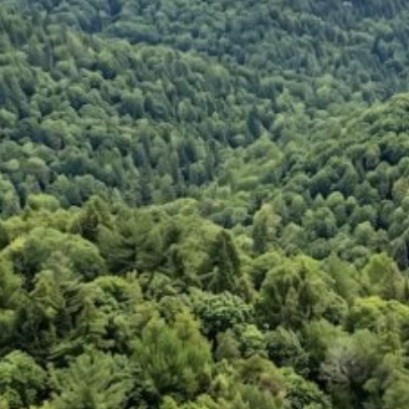
Unprecedented milestone in Pakistan: it has managed to plant 10 billion trees in 3 years to reforest its forests
Trees are key in the fight against climate change, but in Pakistan they fulfill a more important function, sustaining the territory. The country suffers some of the worst effects of climate change, although it hardly generates polluting emissions. For this reason, the Government launched a massive reforestation program to stop this deterioration. The initiative seeks to change the environmental balance and, at the same time, sustain very fragile rural economies.
Pakistan has managed to plant 10 billion trees in 3 years to reforest its forests. Pakistan promoted one of the largest reforestation projects in the world and set the goal of planting 10 billion trees in a few years. The program, known as Ten Billion Tree Tsunami Programme, started after a first preliminary phase in the province of Khyber Pakhtunkhwa. There, authorities managed to regenerate one billion trees before 2021, combining new plantations with protection of degraded areas. That experience served as the basis for expanding the plan nationwide. The Government set an intermediate goal of 3.2 billion trees in the first phase of the expanded program. By 2026, the initiative has been integrated under the umbrella of "Green Pakistan", which maintains the final goal although it has opened audits to check how many trees are still alive. The actual survival of the plantations has become the main control point. The social impact has also been notable, the authorities estimate that the program has generated more than two million green jobs, especially in nurseries, forest surveillance and rural jobs. Many of these positions have gone to young people without access to stable employment. Beyond the numbers, the project responds to a structural urgency. Pakistan barely has 5% forest area, well below the world average. Without direct intervention, the advance of desertification and heat waves threatens both agriculture and access to water. The real impact of the reforestation program in PakistanThe first independent analyzes confirm that the program has increased forest cover, but show a more moderate environmental impact in the short term. A study based on satellite data detects a net increase of about 300 square kilometers of forest mass in the intervened areas until 2020. This increase is partly explained by natural regeneration. The project did not limit itself to planting trees, it also closed areas to grazing and strengthened surveillance to allow the forest to recover on its own. This strategy reduced deforestation in areas where previous pressure already existed. The effects on the local climate, however, are more discrete. Researchers have observed a slight increase in rainfall in areas with higher intervention density, around 0.5% and 0.8% in some periods. They have not detected clear changes in temperatures or conclusive results on air quality. These data do not invalidate the program, but they do lower immediate expectations. Experts remind us that the climate benefits of forests take time. Trees take years to reach a size that significantly influences the environment. Trees are key in the fight against climate change, but in Pakistan they fulfill a more important function: sustaining the territory. The country suffers some of the worst effects of climate change, although it hardly generates polluting emissions. Therefore, the Government launched a massive reforestation program to stop this deterioration. The initiative seeks to change the environmental balance and, at the same time, sustain very fragile rural economies. Pakistan has managed to plant 10 billion trees in 3 years to reforest its forests Pakistan promoted one of the largest reforestation projects in the world and set the goal of planting 10 billion trees in a few years. The program, known as Ten Billion Tree Tsunami Programme, started after a first preliminary phase in the province of Khyber Pakhtunkhwa. There, authorities managed to regenerate one billion trees before 2021, combining new plantations with protection of degraded areas. That experience served as the basis for expanding the plan nationwide. The Government set an intermediate goal of 3.2 billion trees in the first phase of the expanded program. By 2026, the initiative has been integrated under the umbrella of "Green Pakistan", which maintains the final goal although it has opened audits to check how many trees are still alive. The actual survival of the plantations has become the main control point. The social impact has also been notable, the authorities estimate that the program has generated more than two million green jobs, especially in nurseries, forest surveillance and rural jobs. Many of these positions have gone to young people without access to stable employment. Beyond the numbers, the project responds to a structural urgency. Pakistan barely has 5% forest area, well below the world average. Without direct intervention, the advance of desertification and heat waves threatens both agriculture and access to water. The real impact of the reforestation program in PakistanThe first independent analyzes confirm that the program has increased forest cover, but show a more moderate environmental impact in the short term. A study based on satellite data detects a net increase of about 300 square kilometers of forest mass in the intervened areas until 2020. This increase is partly explained by natural regeneration. The project did not limit itself to planting trees, it also closed areas to grazing and strengthened surveillance to allow the forest to recover on its own. This strategy reduced deforestation in areas where previous pressure already existed. The project design also conditions its results. Ecologists warn that poorly planned reforestation can deplete water resources or displace agricultural activities. In Pakistan, authorities have tried to prioritize species adapted to each ecosystem, from conifers in mountainous areas to drought-resistant varieties in plains.