Wood construction: from sustainable niche to industrial building
Mass timber construction is advancing as a technical alternative for lighter, faster buildings with lower embodied carbon.
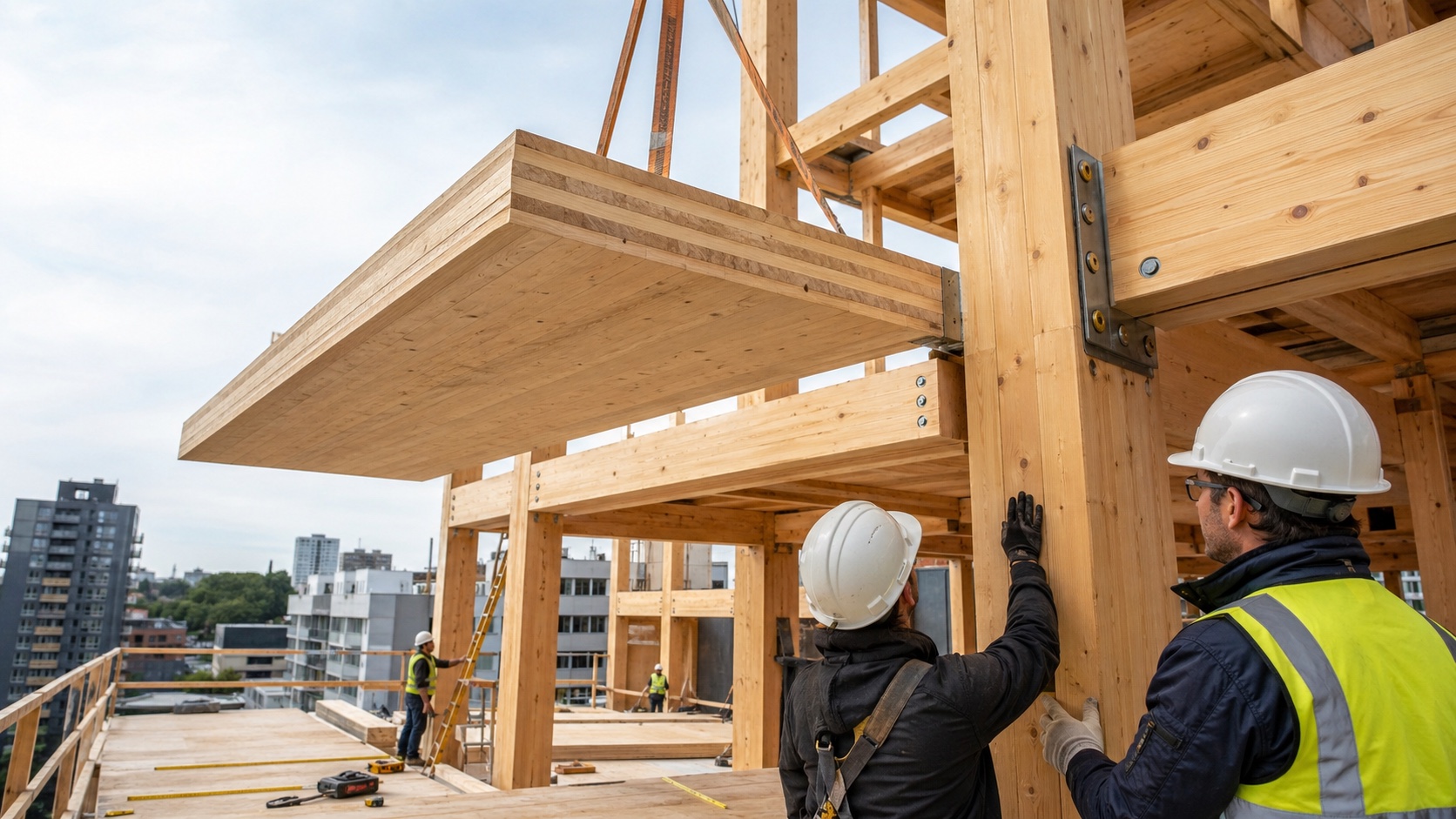
Wood construction is entering a stage of maturity that is moving it away from a niche position and closer to industrial building practice. The development of systems such as CLT, glulam, LVL and prefabricated panels shows that wood is no longer presented only as an aesthetic or residential option. It is becoming a technical platform capable of competing in larger projects, with increasingly complex structural, logistical and environmental requirements. In recent months, the global conversation on building has again focused on mass timber as a response to three simultaneous pressures: reducing embodied carbon, accelerating construction schedules and improving the efficiency of building processes. For the forestry, wood and furniture industries in Latin America, this trend is highly relevant. It raises questions about supply, certification, machining, technical training and the capacity to transform raw material into high-value components. From a technical point of view, mass timber construction is based on engineered wood products that take advantage of the strength of the natural material while stabilizing it through industrial design. Cross-laminated timber panels can form walls, floors and cores with solid structural capacity. Glued laminated beams provide longer spans and controlled shapes. Prefabricated systems reduce wet work on site and move part of the process into factories, where precision, quality control and planning are easier to manage. This change in logic is central. The building site becomes less dependent on improvisation and moves closer to an assembly model. Components arrive cut, machined, numbered and ready to be installed. This can reduce schedules, lower waste, organize logistics and improve safety. In well-coordinated projects, wood structures can be closed quickly, allowing teams to move earlier into services, envelopes and finishes. The environmental benefit is one of the most visible arguments, but it needs to be analyzed with rigor. Wood can store carbon during its service life and partially replace materials with higher footprints, as long as it comes from responsibly managed forests and is used in durable buildings. Sustainability does not depend only on the material itself, but on the full system: fiber origin, transportation, manufacturing, moisture protection, maintenance, repairability and the final destination of components. Technical protection remains a key point. Structural wood requires careful design against water, fire, insects, support details, ventilation and interfaces with other materials. Far from being an insurmountable weakness, these factors demand specialized knowledge. International experience shows that wood buildings can meet high standards when protective layers, detection systems, construction details, seals, barriers and assembly protocols are correctly specified. For manufacturers, the growth of wood construction creates opportunities beyond structural frames. It also demands cladding, stairs, joinery, integrated furniture, acoustic solutions, structural hardware, connectors, surface treatments and installation services. The value chain becomes more complex and requires dialogue among architects, engineers, sawmills, panel plants, machinery suppliers, construction companies and assembly specialists. Prefabrication is one of the fields with the greatest potential. By working with digital models, CNC machining and early planning, companies can produce components with precise tolerances and lower waste. This approach aligns with more industrialized construction, where quality depends not only on individual skill on site, but on repeatable processes. For Latin America, where many projects still face delays, overruns and high waste levels, this transition may be especially relevant. The economic dimension is equally important. Mass timber can shorten financing exposure by reducing construction time, but it also requires early decisions, coordinated design and reliable supply. If engineering, logistics and procurement are not aligned from the beginning, the benefits can disappear quickly. This is why the model favors integrated work between designers, fabricators and builders. Training is another challenge. Building with mass timber is not simply replacing concrete with wood panels. It requires calculating, detailing, transporting, lifting, protecting and assembling in a different way. Universities, technical centers, industry associations and companies will need to train professionals who understand the material from forest to finished building. Without that foundation, growth may remain limited to isolated projects or depend too heavily on imported knowledge. The future of wood construction will depend on the ability to turn a sustainable trend into a robust productive ecosystem. The region has forest resources, industrial tradition and demand for more efficient buildings. The leap will come from adding engineering, certification, design and coordination. When wood is treated as a system, not merely as a raw resource, it stops being a romantic promise and becomes a real tool for building better.