
Precision hardware: the new technical frontier in furniture
Precision hardware is becoming essential to improve assembly, durability, ergonomics and competitiveness across the furniture industry.
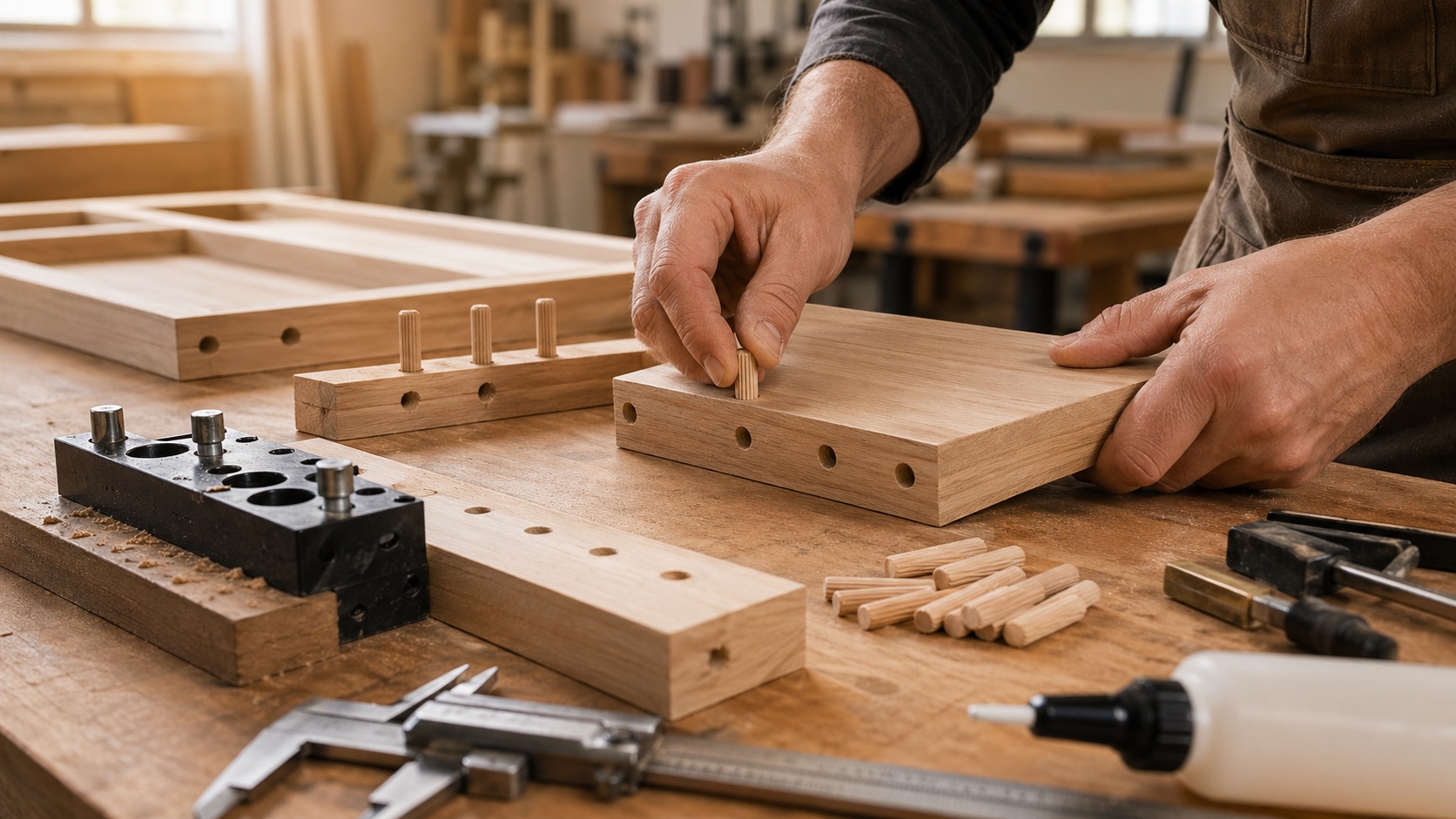
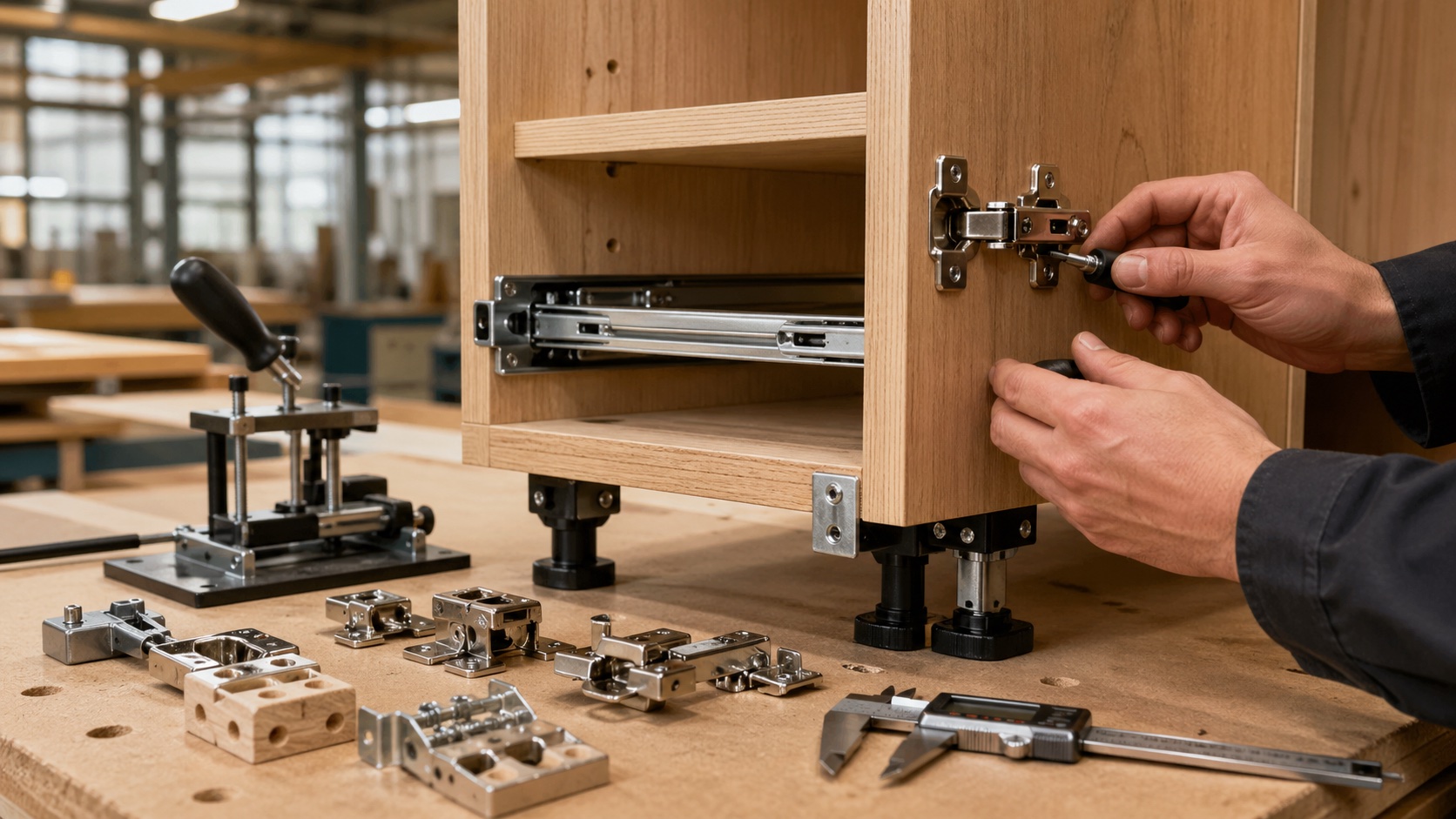
The evolution of contemporary furniture is pushing the industry to pay closer attention to elements that long remained outside the spotlight: hardware. Hinges, drawer slides, connectors, lifting systems, concealed runners and soft-closing mechanisms are no longer secondary accessories. In a market that demands furniture that is more durable, easier to install, more precise and more adaptable, precision hardware is becoming a decisive technical frontier for manufacturers, cabinetmakers, designers and component suppliers. The topic has gained visibility in recent international events linked to furniture production, where the conversation about components has increasingly intersected with automation, materials, sustainability and manufacturing processes. For the Latin American industry, the message is clear: improving the quality of a piece of furniture does not depend only on choosing good boards, veneers, solid wood or finishes. It also requires a more intelligent approach to the points where parts join, move, carry weight, adjust and withstand daily use. From a technical standpoint, the development of hardware is driven by a combination of mechanical precision, material engineering and ease of assembly. A modern hinge can offer multi-axis adjustment, soft closing and tolerances designed for faster production lines. A high-performance drawer slide must support load, maintain lateral stability, move smoothly and preserve its behavior even when the furniture is used many times a day. Connectors, meanwhile, are moving beyond simple fastening parts and becoming solutions that influence assembly speed, disassembly options and the final quality perceived by the user. This shift has a direct impact on productivity. In workshops and factories that handle short runs, custom furniture or flexible production, every minute of adjustment matters. A well-specified hardware system can reduce installation errors, avoid rework and deliver more consistent results across different operators. Repeatability becomes especially important when production integrates machining centers, multi-boring machines, design software and semi-automated processes. Hardware is no longer an isolated purchasing decision; it becomes part of the full manufacturing system. There is also a design dimension. End users may not know the technical name of a concealed runner or a damped hinge, but they immediately notice whether a drawer moves smoothly, whether a door remains aligned, whether a module feels solid or whether a mechanism seems fragile. In kitchens, bathrooms, wardrobes, offices and commercial furniture, that everyday experience defines much of the product’s perceived value. For that reason, furniture design needs to incorporate hardware from the beginning, not as a final-stage adjustment. The same logic applies to quality control. When hardware is specified early, manufacturers can align drilling patterns, tolerances, packaging, assembly instructions and after-sales service around a coherent technical standard. This reduces improvisation on the shop floor and helps transform a good design into a repeatable product. In an industry where small dimensional differences can affect the opening of a door or the movement of a drawer, precision is not a luxury feature. It is part of the product’s reliability. Ergonomics is another growing factor. Handleless opening systems, lift mechanisms, corner solutions, full-extension slides and interior accessories make it possible to use space more efficiently and improve access. In smaller homes and multifunctional interiors, furniture must solve more needs in less surface area. Hardware provides movement, safety and comfort, but it also requires greater technical knowledge to select, install and regulate each solution correctly. Sustainability adds another layer. Furniture that can be adjusted, repaired or disassembled has a better chance of extending its useful life. Replaceable hardware, demountable connectors and systems that avoid irreversible joints help reduce premature disposal and support maintenance. Although a metal component may represent only a small share of the total volume, its influence on the durability of the whole product can be decisive. In this sense, hardware quality is also connected to responsible material use. For Latin American manufacturers, the challenge is not only to access better components but to integrate them properly. Workforce training, technical data interpretation, machining accuracy and coordination between design, purchasing and production will become increasingly important. Choosing hardware only by unit price, without evaluating its effect on installation, warranty and service life, can be more expensive than investing from the start in a solution compatible with both the product and the process. The trend suggests that hardware will continue to gain prominence. The furniture industry is moving toward products that are more customized, efficient and demanding in performance. In that context, competitiveness is not defined only by the visible surface, but by the engineering behind every movement. Precision hardware is increasingly the technical language through which furniture proves its quality.