Drones to plant trees: this is how Argentina uses technology to revolutionize reforestation
Thanks to the use of drones, Argentina plans to plant more than 100,000 trees on 13 hectares Nature is one of the fundamental pillars of the Earth. Natural ecosystems fulfill essential functions and, due to human activity, accelerated degradation has occurred in many areas, putting the natural balance of the planet at risk. However, South America has taken a step forward in the reforestation of these lands. Thanks to an innovative method, Argentina is going to implement a system based on the use of drones to recover hundreds of kilometers of trees.
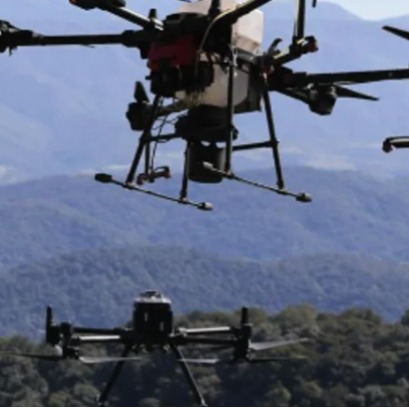
The initiative, based on launching seeds in biodegradable capsules to recover forests in degraded areas, aims to reverse damage in the Gran Chaco, a vital territory butThe use of drones to promote reforestationArgentina is going to use science and technology to restore one of the largest forest regions in South America. The Gran Chaco is a subtropical dry forest ecosystem of great biodiversity that is currently threatened by deforestation. Thanks to the organization The Nature Conservancy (TNC) and the startup ReForest Latam, Argentina seeks to strengthen vegetation cover through this aerial planting technique to cover surfaces where manual planting is complex. The intervention was carried out in January 2026 in Tostado, Santa Fe, Bandera and Santiago del Estero, and the objective is to recover up to 13 hectares through this aerial dispersal, which is equivalent to about 8,000 native trees. Among the species, the white algarrobo, the yellow palo drunk, the guayacán and the red quebracho from Santiago stand out. How reforestation occurs from the air Faced with completely deforested land, traditional planting involves a series of inconveniences that make its recovery difficult. And in those areas that are more difficult to access, more resources and logistics are required.• The curious trick of the spoon in the window that more and more people are using• This is how the first man in space died, but it took 45 years to reveal what had happened to him. This is why the use of drones reduces costs and allows large areas to be intervened in less time. The technology facilitates a planned dispersal of seeds, in addition to allowing action in areas affected by fires or where manual planting is not viable. After the implementation of this innovative method, a total planting of more than 100,000 trees is expected. The drones will fly over the determined areas to achieve reforestation that will return green to the Gran Chaco. The use of biodegradable capsules To carry out the plan and achieve the planting of thousands of trees, the use of biodegradable capsules is necessary. In this case, these are projectiles that are launched by drones, where all the seeds are found. Called iSeeds, these water-soluble and biodegradable capsules are designed for each species and location. They contain native seeds activated with microorganisms, consortia of bacteria, fungi, organic fibers and nutrients that promote exceptionally strong development. In addition, they incorporate botanical extracts with insecticidal properties to minimize the use of chemicals, thus ensuring that each flight responds to the specific needs of the territory. Ignacio Gasparri, director of science at ReForest, points out that the approach combines applied biotechnology with ecosystem analysis to make the restoration efficient and scalable. Before each flight, the team rigorously evaluates the weather conditions. It is vital that dispersal anticipates rain, preventing seeds from being exposed to drought or extreme heat without having germinated.