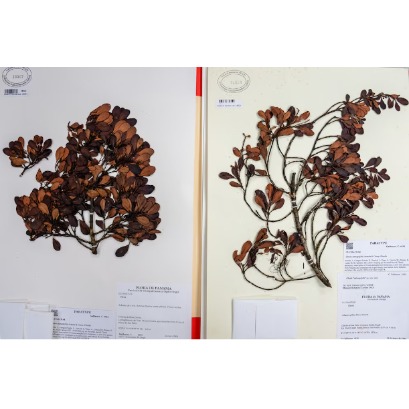
They discover in Panama a unique tree in the world that is already on the verge of disappearing
The species was identified after more than 20 years of study, but today only five specimens remain. A unique species in the world, discovered in Panama and with characteristics that defy the logic of traditional botany, already faces an imminent threat: it could disappear even before being completely understood by science. This is Clusia nanophylla, a tree recently identified by researchers at the Smithsonian Tropical Research Institute (STRI), whose existence is limited to a specific area of ??the country.
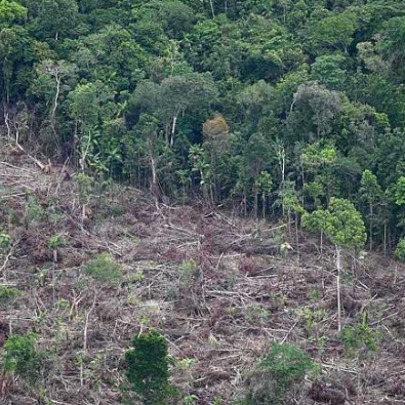
The discovery is not recent in terms of the field, but it is in its scientific recognition. The first samples were collected in the year 2000 in the Ngäbe-Buglé region, but it was not until more than two decades later that scientists confirmed that it was a new endemic species, after an extensive process of analysis, comparison and taxonomic validation. Botanist Jorge Aranda, who led the research, explained that the discovery was not immediate, but the result of years of analysis and scientific review. It was not until about 23 years later when we realized that we could have a new and highly endemic species on our hands, said the researcher, referring to the long process it took to confirm the uniqueness of the plant. The name Clusia nanophylla is not coincidental. It makes direct reference to one of its most striking characteristics: it has the smallest leaves recorded within the genus Clusia, which groups more than 320 species in tropical America and at least 42 in Panama, which positions the country as one of the main centers of diversity of this type of plants. However, what makes this discovery a critical case is not only its rarity, but its state of conservation. When the researchers returned in 2024 to the area where they had originally found multiple specimens, only five trees remained. The rest had disappeared, probably due to deforestation, the expansion of roads and the transformation of the land for activities such as livestock. Aranda also warned about the direct impact of human activity on the disappearance of the species. The next time we went to the place (...) only a few trees remained of the many that we had seen the first time, he stated, evidencing the rapid reduction of the population in its natural habitat. This situation places the species in a possible category of critically endangered extinction, according to criteria of the International Union for Conservation of Nature (IUCN), which shows a paradox: a plant recently described by science could already be on the verge of disappearing. But beyond its size or its limited distribution, the genus to which it belongs has a a particularity that makes it an object of global study. Clusia species are the only trees capable of carrying out a special type of nocturnal photosynthesis, known as Crassulaceae acid metabolism or CAM, a mechanism that allows them to adapt to extreme conditions. For his part, scientist Klaus Winter, also from STRI, highlighted one of the most surprising characteristics of the genus to which this plant belongs. Clusias are the only trees in the plant kingdom capable of fixing carbon dioxide at night, he explained, in reference to its ability to carry out a special type of photosynthesis uncommon in trees. This process means that, unlike most plants, some species can absorb carbon dioxide at night, reducing water loss and increasing their efficiency in dry or variable environments. In some cases, they can even alternate between this system and traditional photosynthesis, depending on factors such as soil moisture or water availability. Although it has not yet been determined whether Clusia nanophylla has this ability, the researchers estimate that it could be of a species with conventional photosynthetic behavior (C3), which does not reduce its scientific value or its importance within the ecosystem. However, regarding the new species, the expert was cautious. “We have not yet studied the photosynthetic pathway of Clusia nanophylla (…) but we predict that it will be a normal C3 plant,” said Winter, making it clear that there are still key aspects of its functioning that have not been fully analyzed. The discovery was led by botanist Jorge Aranda, together with a team of specialists that included the collaboration of international experts in the Clusiaceae family, who confirmed that it was a species without prior registration. The process included the dissection, measurement and detailed analysis of leaves, flowers and fruits, in addition to the comparison with existing collections in herbaria. From a scientific point of view, the process to describe a new species is complex and requires detailed work that can take years. It is an arduous process and requires a lot of time, from collecting samples with all the parts of the plant (...) to measuring everything and describing each aspect, explained Aranda, underlining the importance of strengthening biodiversity research. One of the key elements in the research was access to samples conserved in the SCZ Herbarium of the STRI, which made it possible to establish clear differences between to other species of the same genus. This type of work, although not very visible, is essential to understand the real biodiversity of tropical countries. The case of Clusia nanophylla also highlights a broader problem: the lack of effective protection of areas with high ecological value. The area where this species is found does not have an official protection category, which facilitates human intervention without major restrictions. For scientists, this reinforces the need to promote policies that allow the conservation of these spaces before unique species disappear without even having been studied in depth. The loss of a A plant like this not only implies an ecological impact, but also the disappearance of biological information that could be key to future research. Furthermore, the finding underlines the urgency of having more botanists and taxonomists dedicated to the exploration and classification of species, a task that requires years of work and that remains limited in many tropical regions, despite their enormous natural wealth. Aranda himself insisted that this type of findings reveals the need to expand scientific work in the field. The more plants we identify and add to the collections, The better we will be able to understand the countrys plant biodiversity, he stated, highlighting that Panama continues to be a territory with high potential for scientific discovery. Panama, in particular, is positioned as a natural laboratory where, in small spaces, it is possible to find a high concentration of species of the same genus, which increases the complexity and value of its study. In some cases, in less than 20 meters, up to 10 different species of Clusia can coexist. The discovery of Clusia nanophylla not only expands scientific knowledge about tropical flora, but also starkly exposes biodiversity. In this case, science arrived just in time to name it, but not necessarily to save it.