Scientists cant believe it: they discover that an African forest regenerates without planting a single tree
When you think of Africa, the image is usually closer to a desert and a dry land than a forest full of trees. The reality is that, on that continent, many regions have a common landscape of soil degradation and loss of vegetation. Faced with this reality, attempts to reverse the advance of desertification have been constant, but in many cases insufficient.
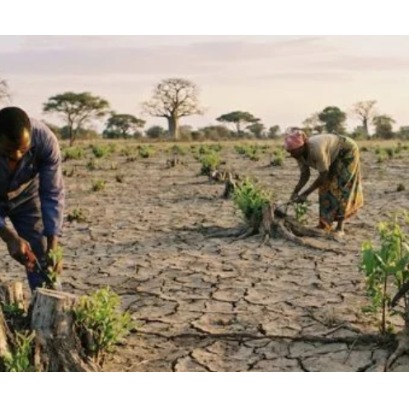
The most repeated solution has been to plant trees. Big budgets and ambitious campaigns. However, what baffles researchers is what is happening in central Tanzania, where the forest returns without planting a single tree. The method that allows the forest to return without planting trees in AfricaIn dry areas of Tanzania, what is done is not starting from scratch, but activating something that never completely died. Roots and stumps of native trees that were felled decades ago survive beneath fields of dry earth. At first they appear as weak bushes and, when cared for, they behave like trees again. The technique has two names. In English it is known as Farmer Managed Natural Regeneration (FMNR) and, in its local version, Kisiki Hai, live stump in Swahili. The method is based on identifying an active stump, choosing one or two strong shoots and removing the rest. Underground energy is concentrated and growth accelerates. In the 1980s in Niger, agronomist Tony Rinaudo discovered that more than 80% of seedlings did not survive in arid conditions. Plantar was not working. But when he noticed some supposed bushes that, in reality, sprang from roots that were still alive, he understood the problem. They werent weeds, but rather trees trying to come back. From there, the way of working changed and the landscape began to respond much better.Why natural tree regeneration works in TanzaniaIn Tanzania, according to the FAOs FRA 2020 report, most of the countrys forest is not planted, but regenerates naturally. These systems maintain a high underground biomass, even in highly degraded landscapes. The problem is not the total disappearance of trees, but the loss of volume, progressive degradation and lack of continued management. In regions like Dodoma, farmers who apply FMNR recover shade in a few years, improve water retention and slow erosion. The soil cools, the roots hold it and the field becomes productive again. This is important because many families cannot wait a decade for a seedling to survive. What are the next steps to recover the forest in dry areas? In this scenario, the role of the farmer is central. FMNR does not work as a one-time campaign, but as a habit. You have to prune, protect and look at the field again every season. That is why it connects better with communal and agricultural lands than with external projects full of infrastructure. Local organizations such as the LEAD Foundation have promoted the training of champion farmers who teach the method in their own villages. In the end, they do not distribute trees, they share knowledge, and that difference is what marks real change.