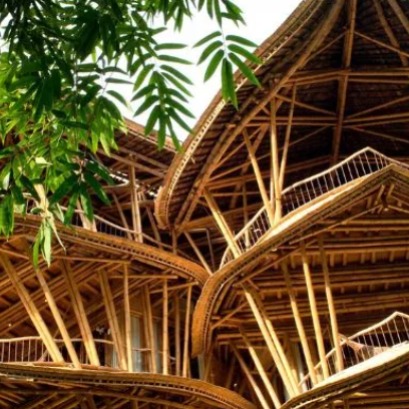
The South American country that changes construction thanks to an ancient, mega-resistant material: more than steel
This material that grows in South America creates the most resistant constructions and radically changes the world of architecture One particular building material has been used for millennia by various cultures in South America. This is due to its structural resistance that allows the creation of homes, bridges and shelters. Its archaeological presence shows that it was one of the most valued construction resources in seismic and humid areas.
Although for a good part of the 20th century it was associated with low-income rural construction, scientific research in recent decades has radically changed that perception: this material from South America has become a star material in anti-seismic engineering around the world. The South American country that changes construction thanks to an ancient, mega-resistant material: more than steel. Bamboo, and especially guadua angustifolia, is a key material. Colombia is the main exporter of guadua angustifolia, a native bamboo species recognized for its great resistance, which makes it a sustainable alternative to wood. The key to its seismic behavior. Its all in its anatomical structure, guadua is a construction material of extremely resistant longitudinal fibers, with a weight-resistance ratio higher than that of many conventional woods and even comparable, in some studies, to steel in specific resistance. This behavior, added to its flexibility, allows guadua constructions to absorb and dissipate seismic energy without collapsing. Its tendency is not to break brittlely, but to deform and return to its position, which reduces the risk of catastrophic failure. In addition, guadua offers unique environmental advantages. The material from South America that marvels the world Modern advances have consolidated this potential. At the end of the 20th century, Colombian researchers, including architect Simón Vélez and teams from the National University of Colombia, developed standardized techniques for metal joints, preservative treatments and modular systems that led to guadua formal certifications. In experimental tests, guadua constructions have shown exceptional performance. In full-scale tests conducted in Japan and in laboratories in South America, entire structures withstood simulations of earthquakes equivalent to magnitudes greater than 7 without serious structural failure.This wood has become a pillar of bioarchitecture and green building strategies in seismic countries because:• It grows quickly• it stores large amounts of carbon• it can be grown sustainably• it requires less energy to process than steel or cementToday, thanks to its scientific validation and its proven performance in real earthquakes, guadua is ceasing to be an ancestral material to become one of the contemporary references for safe, light and sustainable construction in regions prone to earthquakes.
IT MAY INTEREST YOU
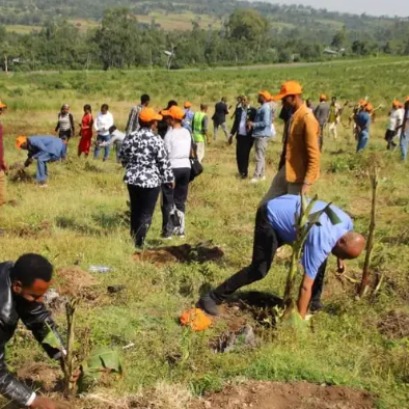 The country that planted 350 million trees in one day and caused great consequences
Discover the country that planted 350 million trees in one day and caused great consequences Climate change and deforestation have caused great ecological damage in many places. For this reason, a country planted 350 million trees in one day and thus obtained a world record, although it is estimated that in 2025, it will plant twice as many.
 The discovery of methane-producing bacteria in trees rethinks the ecological role of forests
Pioneering study shows trees surprising internal microbial diversity and potential influence on global climate, driving novel strategies for agricultural and forestry management
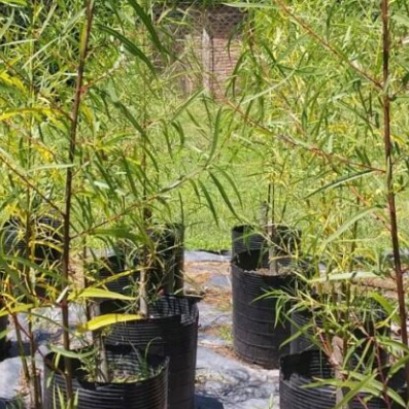 INTA Delta begins propagation of seven Creole willow clones for ecological restoration in Paraná
As a result of the rescue, domestication and registration work carried out by Teresa Cerrillo, a leading researcher in Salix Genetic Improvement, within the framework of the National Genetic and Forest Resources Programs of INTA, the multiplication and propagation of seven clones of Creole willow (Salix humboldtiana) began recently registered in the National Seed Institute (INASE) by INTA Delta del Paraná.