
A study analyzed the impact of forest fire smoke on cardiovascular health
The investigation was based on data from more than 20 million people and showed the consequences of exposure to fine particles in these events according to the United Nations Organization (UN), forest fires are rapidly increasing in intensity, frequency and duration due to the climate crisis
The fine particles of 2.5 micrometers or less that are released during these events, known as PM2.5, concern the experts. A research analyzed a little visible damage, but equally serious: the deterioration of the cardiovascular system. The study published in the journal Journal of the American College of Cardiology (JACC) stated that prolonged exposure to the smoke of forest fire in the risk of developing heart failure, compared to other sources of air pollution. The impact of smoke on the cardiovascular system The work analyzed data from more than 22 million people affiliated with the Medicare medical insurance program in the United States between 2007 and 2018. The study found that breathing air contaminated with smoke from forest fires for long periods can increase the risk of heart failure in older adults. Specifically, when the amount of PM2.5 present in the air due to smoke grows even in small quantities, the danger to the heart also increases. The researchers calculated that for each increase of 1 microgram per cubic meter in the average exposure to smoke for two years, the risk of developing heart failure grows approximately 1.4%. That increase, although it seems minimal, can have a great population impact. In addition, the study showed that the more days a year there is smoke in the air above certain levels, the greater the risk. That is, not only does it matter how much smoke there is, but also how many days a person is exposed. With time, the pollution of the smoke that a person breathes can increase very slightly, but that small increase is fundamental to heart health, especially in vulnerable populations. Even a small individual risk has a great impact on public health, Hua Hao, a researcher at the University of Emory and the main author of the study, explained. Damage does not affect everyone equally. We also found that the association between PM2.5 of smoke and heart failure was stronger in women, eligible people for Medicaid (Public Health Program for Vulnerable Population) and those who live in low -income areas, indicating greater susceptibility, said Hao.What methodology used the researchers The work was based on a data analysis of more than 22 million older people. The researchers observed their state of health over 11 years, from 2007 to 2018, to study if they had developed heart failure. To know how much smoke each person breathed, detailed maps of air pollution were used, which allow estimating the presence of fine particles (PM2.5) from forest fires in areas of just a square kilometer. Then, that information was organized according to the postal code where each person lived, and an average exposure was calculated for the two years prior to each follow -up stage. From these data, the amount of smoke was compared breathing with the appearance of heart problems, taking into account factors such as age, sex, income level or if the person lived in an area with more or less resources. In average, the people studied were exposed to 0.51 micrograms per cubic meter of smoke per year, a low amount but that, according to the authors, can have important effects if it is maintained over time. The team also explained that the study has some limitations. For example, pollution estimates may not reflect exactly what each person breathed, and health data were taken from administrative records that could not include all details, such as life habits or family history.
IT MAY INTEREST YOU
 Missions | New illegal felling in the Piñalito Provincial Park in San Pedro reveals the silent expansion of deforestation in protected areas
The advance of deforestation on protected areas was once again evident this week in the Piñalito Sur Provincial Park, in San Pedro, where the Ministry of Ecology and Renewable Natural Resources confirmed a new case of selective illegal logging. The event occurs in a context of growing concern about the fragility of the environmental control system in rural and border areas, where the scarcity of resources, personnel and logistics limits the capacity of surveillance against criminal organizations organized to steal native woods and market them on the black market in connivance with sawmill owners.
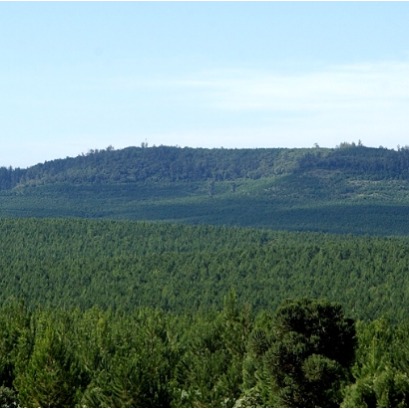 Free seminar on the implementation of the European EUDR regulation on deforestation-free wood products
The Argentine Forestry Association (AFoA) organizes the seminar «EUDR in Forest Products: Current status of implementation. Regulatory requirements and private experiences", which will take place on Wednesday, November 26, from 11:00 a.m. to 12:00 p.m., via Zoom, with live streaming on YouTube. The European Regulation on Deforestation-Free Products (EUDR) will enter into force on December 31, 2025 and will impose new requirements for forest products entering the European Union market.
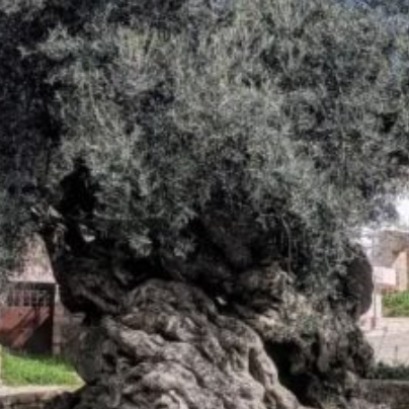 Experts cant believe it, but this tree is the oldest in the world and continues to bear fruit: it is 4,000 years old.
Nature keeps secrets that defy the passage of time, and one of the most surprising examples is a tree that, approximately 4,000 years old, continues to bear fruit today. This specimen has become a symbol of resistance and longevity, capable of surviving climate changes, landscape transformations and human activity itself.