Brazilian forestry sector stands out in sustainability
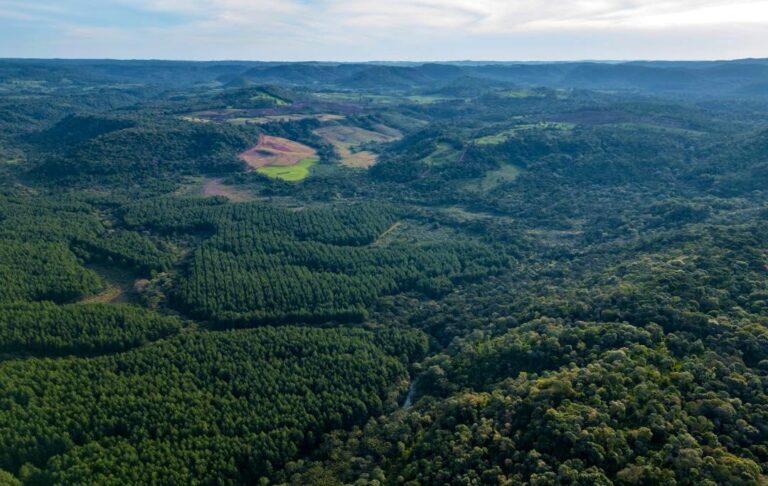
They have more than 713 thousand hectares of pine, leading the national ranking. Eucalyptus covers another almost 450 thousand hectares. In total, Paraná has 1.17 million hectares planted for commercial purposes, according to the Paraná Association of Forestry Companies (Apre) The prominence of the State of Paraná in wood production is a consolidated tradition in the region. The development of planted forests occurred from the 20th century onwards.
The businessmen of the time observed that araucaria production was decreasing and they needed an alternative. With characteristics of good durability and faster growth, pine wood entered the industry to boost production and exports.
The fertility of the soil and the favorable climate also contributed to the growth of the planted area of Paraná, with more than 713 thousand hectares of pine, leading the national ranking.
Paraná has 1.17 million hectares planted for commercial purposes, according to the Paraná Association of Forestry Companies (Apre). In the state the most cultivated woods are pine and eucalyptus. But the area planted with pine trees is greater.
Eucalyptus covers almost 450 thousand hectares. With a cut-off point of 6 to 7 years, eucalyptus is widely used for biomass and, in the sawmill, cutting can be carried out for 13 to 14 years.
Pine can vary in cut for biomass and cellulose use from 13 to 14 years and for sawmill use from 18 to 21 years, with multiple use.
“Pine is used for lamination, plywood, split lumber, doors, frames and furniture manufacturing. It is also used in the pulp industry and for energy,” explains José Mauro Moreira, researcher at Embrapa Florestas.
Along with Santa Catarina, Paraná has the greatest role in this productive chain, he highlights. “With emphasis on pine and exports of sawn wood products, frames, plywood and wooden furniture,” adds Moreira.
“We have a mature and developed chair. We have an industrial park made up of large companies and adds value to the production chain. Paraná has strong private companies in the forestry sector. A favorable climate and soil too,” he points out.
The large manufacturing park installed in Paraná is also highlighted by the superintendent of the Brazilian Association of the Mechanically Processed Wood Industry (Abimci), Paulo Pupo.
«Paraná has an excellent level of technology and innovation, a well-distributed forest matrix, especially of the pine species, being the main planted area in the country for this species. This distribution covers practically all regions of the state, resulting in the development and consolidation of wood industrial centers of different product segments,” he adds.
Paraná is responsible for more than 54% of the pine volume in Brazil
Paraná has the largest area planted with pine trees in Brazil, with more than 54% of the volume, according to data from the Paraná Association of Forestry Companies (Apre). There are more than 713 thousand hectares of pine planted. Santa Catarina appears shortly after in an area planted with pine trees. Logistics and geographical location favor attention to the national and international market.
The state of Paraná is a leader in exports of reconstituted pine plywood, boards and frames. Data from Apre indicate that the growth in the exported volume of pine plywood was 3.5% in volume and 87.1% in value, in 2021. That year, Paraná exported 66.47% of pine plywood.
The main destination for pine plywood exports was the United States, with US$550.8 million of the national total and US$365.3 million of Paraná exports of the product.
In the export of reconstituted panels, Paraná is responsible for 38.6% of the total. The production of reconstituted wood panels was 8.2 million m³ in Brazil in 2021. According to Apre data, Paraná recorded a growth in export income of 79% and, in volume, an increase of 22.6%.
In marks, Paraná also stands out in exports, with 70.6%. In 2021, more than 122 thousand tons of marks were exported. Again, construction in the United States is the main market. “With this industrial chain, the State can benefit from this product to export it to several countries,” comments Zaid Ahmad Nasser, president of Apre.
Brazilian forestry sector stands out in sustainability
When it comes to sustainability, the Brazilian forestry sector stands out, according to Paulo Pupo, superintendent of Abimci (Brazilian Association of the Mechanically Processed Wood Industry).
This is because he has invested in research. “For example, in genetic research that provides the main species planted in the country (pine and eucalyptus) with excellent productivity per hectare. The ESG practices (acronym in English for Environmental, Social and Governance) that are used today by different segments have been part of the routine of companies for many years,” he explains.
The sector also participates in the decarbonization process and in the absorption and retention of carbon present in the atmosphere. “This remains stored in the wood used as raw material for the manufacture of wood products and, consequently, throughout the entire life cycle of the products,” says Pupo.
Zaid Ahmad Nasser, president of Apre, states that practically for every hectare planted with pine, another hectare of native forest is preserved. “We have links with ten teaching and research institutions to develop new forestry practices with an industrial bias to have connectivity with the industry. We see, during these more than 50 years of history, a development of industrial and environmental techniques to reduce the impact.”
With a diversified production chain, Breno Menezes de Campos, head of the Department of Planted Forests of the Secretary of State for Agriculture and Supply, affirms that Paraná has consolidated institutions, companies and universities that add quality to the forestry sector.

IT MAY INTEREST YOU
 The discovery of methane-producing bacteria in trees rethinks the ecological role of forests
Pioneering study shows trees surprising internal microbial diversity and potential influence on global climate, driving novel strategies for agricultural and forestry management
 Nation reinforces prevention and training against forest fires
The director of the Federal Emergency Agency (AFE), Santiago Hardie, referred to the support that the Nation provides in fighting fires. He argued that the majority of igneous sources respond to human interventions and that, therefore, social awareness is a central tool to reduce environmental, material and human damage.
 INTA Delta begins propagation of seven Creole willow clones for ecological restoration in Paraná
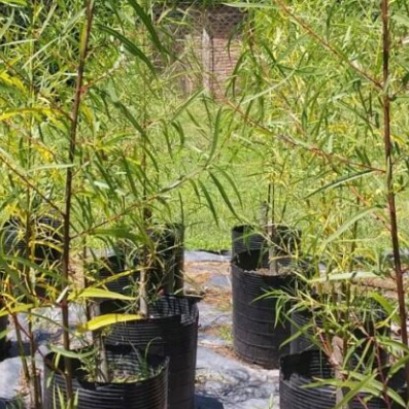
As a result of the rescue, domestication and registration work carried out by Teresa Cerrillo, a leading researcher in Salix Genetic Improvement, within the framework of the National Genetic and Forest Resources Programs of INTA, the multiplication and propagation of seven clones of Creole willow (Salix humboldtiana) began recently registered in the National Seed Institute (INASE) by INTA Delta del Paraná.