Why are kitchen utensils made of wood?
Many of the kitchen utensils that we use in our day to day are made of wood. Today we are going to analyze the properties that make wood an optimal material for the manufacture of kitchen utensils.
First, wood is a material that does not conduct heat, therefore, it is possible to keep kitchen utensils (especially wooden ladles) exposed to heat without danger of burning.
The wood, in addition, is a material with great durability (as long as the maintenance is adequate) and have a great resistance, compared to its low weight. For this reason, it is used in wooden boards for cutting food or in wooden mallets for fillets.
Another advantage of wooden kitchen utensils is that wood is an inert material, that is, it does not react with other substances, which means that it does not contaminate food. In addition, wood is not attractive either for germs or bacteria, so the wood is much cleaner than other materials.
The wooden kitchen utensils are soft and delicate to avoid scratching the delicate surfaces of the pans and saucepans and are recommended especially for non-stick coatings or stainless steel. The use of a suitable material favors that the useful life of the kitchen tools is greater.
Finally, the wood and its great versatility give rise to endless designs, providing a special and unique to each kitchen. The different species of wood also provide their special touch, offering a wide range of color and characteristics to the wooden kitchen utensils.
We must not forget that wood is a natural, renewable, sustainable, reusable and recyclable material that fits perfectly in the circular economy and the use and management of this material favors the good condition of the mountains.

IT MAY INTEREST YOU
 Native forest | In Misiones, controls are tightened on routes for illegal transport of native wood, logging of forests without permits and fraudulent digital guides
Informality in forestry activity in Misiones was once again evident, the culture of operating illegally is a historical problem, and the Ministry of Ecology and Renewable Natural Resources carries out the corresponding control and inspection operations in the regulation of productive activity and sustainable management for the use of native forests.
 The discovery of methane-producing bacteria in trees rethinks the ecological role of forests
Pioneering study shows trees surprising internal microbial diversity and potential influence on global climate, driving novel strategies for agricultural and forestry management
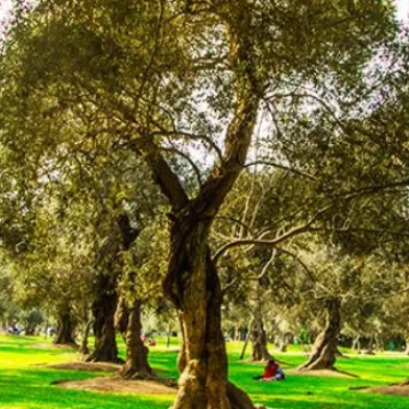 The city in South America that breathes thanks to a thousand olive trees planted in the 17th century
In the heart of South America there is a city that, among the noise and concrete, still breathes thanks to an olive forest