¿Dónde está el lugar más húmedo del mundo?
n muchos lugares la lluvia es una bendición, en otros tantos es causa de desastres, pero en una parte de Meghalaya es algo habitual
El pueblo de Mawsynram, en Meghalaya (India) recibe 467 pulgadas de lluvia por año, lo que lo convierte en el lugar más húmedo en la Tierra. Tanto es así que los obreros que trabajan al aire libre suelen llevar paraguas de cuerpo completo hechos de bambú y hojas de plátano.
Los demás habitantes están tan acostumbrados que una lluvia no es algo que los pueda detener. Las fuertes lluvias se debe a las corrientes de aire de verano moviéndose sobre las llanuras de Bangladesh, la recolección de la humedad avanzan hacia el norte, las nubes que se forman golpean las colinas escarpadas de Meghalaya donde se rompen.
Otra de las características más fascinantes y bellas de la región son los “puentes vivientes” de los valles empapados por la lluvia. Se trata de puentes naturales que los locales han ido formando durante siglos manipulando las raíces de los árboles de caucho. La gran ventaja es que de esta manera los puentes se auto-refuerzan naturalmente.
El esqueleto de estos puentes es de bambú, con zarcillos de los árboles de caucho, al parecer tienen que pasar de 6-8 años para que las raíces del árbol sean capaces de soportar el peso de una persona. Las cabras ya hasta tienen su lugar de resguardo en caso de mucha lluvia.

IT MAY INTEREST YOU
 Native forest | In Misiones, controls are tightened on routes for illegal transport of native wood, logging of forests without permits and fraudulent digital guides
Informality in forestry activity in Misiones was once again evident, the culture of operating illegally is a historical problem, and the Ministry of Ecology and Renewable Natural Resources carries out the corresponding control and inspection operations in the regulation of productive activity and sustainable management for the use of native forests.
 Nation reinforces prevention and training against forest fires
The director of the Federal Emergency Agency (AFE), Santiago Hardie, referred to the support that the Nation provides in fighting fires. He argued that the majority of igneous sources respond to human interventions and that, therefore, social awareness is a central tool to reduce environmental, material and human damage.
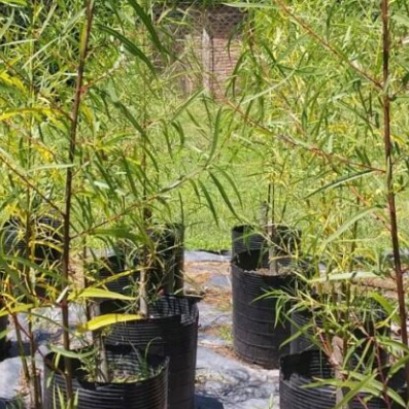 INTA Delta begins propagation of seven Creole willow clones for ecological restoration in Paraná
As a result of the rescue, domestication and registration work carried out by Teresa Cerrillo, a leading researcher in Salix Genetic Improvement, within the framework of the National Genetic and Forest Resources Programs of INTA, the multiplication and propagation of seven clones of Creole willow (Salix humboldtiana) began recently registered in the National Seed Institute (INASE) by INTA Delta del Paraná.