Restoration of the Atlantic Forest: the trinational experience of Argentina, Brazil and Paraguay made it to the FAO global report
The cooperation experience that since 2019 has been promoted by organizations and institutions from Argentina, Brazil and Paraguay to recover the forest landscapes of the Upper Paraná Atlantic Forest has achieved international recognition: it was incorporated as a case study in The State of the Worlds Forests 2026, the report of the Food and Agriculture Organization of the United Nations (FAO) that analyzes the situation of forests on a global scale.
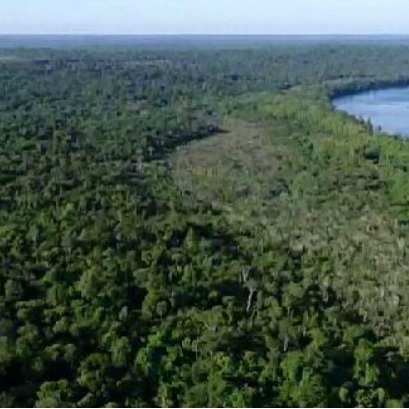
The case, titled Effective governance is key to the restoration of forest landscapes within the framework of the Trinational Pact of the Atlantic Forest in Argentina, Brazil and Paraguay, presents the joint work of the Trinational Atlantic Forest Restoration Network and the Pact for the Restoration of the Atlantic Forest of Brazil. Its inclusion in a publication that brings together experiences from different regions of the world puts into perspective the scope of a regional articulation process that seeks to overcome isolated actions and build a shared strategy for the recovery of the biome.The Trinational Atlantic Forest Pact between Argentina, Brazil and Paraguay shows how cross-border governance strengthens capacity, knowledge and public policies," highlights the FAO report. In Argentina, Fundación Vida Silvestre Argentina participates in this articulation together with scientific institutions, universities and civil society organizations. The entity contributed to the preparation of the case study through the work of Claudia Amicone and Gonzalo Dieguez Gaviola. Having been included in this report that considers experiences from around the world is extremely important and in some way validates the effort we make at the trinational level and in the Misiones jungle in particular, highlighted Claudia Amicone, Atlantic Forest landscape specialist from Fundación Vida Silvestre Argentina. The specialist also highlighted that restoration requires a comprehensive look at the territories and their actors: From Vida Silvestre we are convinced that landscape restoration goes much further than just planting trees and that they are processes that must involve and include the various sectors and actors involved in the territories. Governance and planning: learning from a regional experience One of the main contributions highlighted by the FAO report is the importance of having solid governance to sustain restoration processes in the long term. The trinational experience shows how coordination between organizations, governments and other actors can link public policies, financing, knowledge production, monitoring and local actions. The FAO document also highlights that restoration strategies must integrate the needs and knowledge of rural communities and indigenous peoples, in addition to relating to productive activities, food security and rural development. In this way, the recovery of forests is addressed not only from the environmental dimension, but also from the social, economic and institutional conditions of the territories. In Misiones, this perspective translates into an agenda that seeks to articulate efforts that were previously developed in a fragmented manner. Among the highlighted actions is a participatory process to develop a provincial restoration plan, aimed at incorporating the perspectives of the different sectors and actors linked to the forest. Another initiative mentioned is the creation of the Network of Native Nurseries in Misiones, whose objective is to strengthen the production of plants of native species and link their availability, quality and diversity with the specific needs of restoration projects. The availability of adequate plant material constitutes one of the conditions for planning interventions and sustaining them over time. It currently brings together 55 member institutions and more than 70 organizations involved. Fundación Vida Silvestre Argentina contributes its experience and participates in the construction of this shared agenda for landscape restoration. Restoration indicators and monitoring tools The case study presents data on the increase in forest cover and the area included in active restoration projects. These are two different indicators that allow different aspects of the processes registered in the three countries to be dimensioned. Regarding the increase in forest cover, the report registers 1,811,866 hectares in Argentina and Brazil: 141,866 hectares correspond to Argentina and 1,670,000 to Brazil. Separately, it reports 138,533 hectares under active restoration projects in the three countries. Of that surface, 134,836 hectares correspond to Brazil, 2,253 to Argentina and 1,444 to Paraguay. The publication also highlights the value of geospatial platforms, monitoring systems and ecological monitoring protocols. These tools allow gathering information, observing the evolution of actions and guiding decisions and investments. In this sense, collaboration with initiatives such as MapBiomas contributes to understanding changes in the coverage and land use of the biome. The generation and exchange of information is essential to evaluate progress, identify needs and improve the planning of interventions. Monitoring also makes it possible to link the results of local actions with a regional vision of the forest landscape. An experience recognized in the Restoration Decade The case study is part of the experiences recognized as one of the Flagship Global Restoration Projects, an initiative of the United Nations Decade on Ecosystem Restoration. The recognition brings to the fore trinational cooperation and the role of organizations that work from their territories to recover the Atlantic Forest. It also projects internationally an experience built from the articulation between institutions, the exchange of knowledge and the participation of multiple sectors. The Pact for the Restoration of the Atlantic Forest of Brazil, created in 2009, brings together more than 370 members and develops actions in 17 states of the biome. The initiative articulates different sectors to expand restoration, produce and exchange knowledge, strengthen public policies and accompany projects in the territories. The inclusion of the trinational experience in the FAO world report makes the contribution of this regional cooperation visible: advancing in the restoration of a shared ecosystem requires continuity, planning, scientific knowledge and agreements between those who inhabit, produce, research and manage those territories. In Misiones, this construction is expressed in an agenda that seeks to give greater coordination and scale to the efforts to recover the Atlantic Forest.