
From Australian Buloke to Quebracho: which are the hardest woods in the world
The extreme resistance of certain varieties impacts the choice of materials for floors, furniture or instruments. What natural factors make some of them practically indestructible?
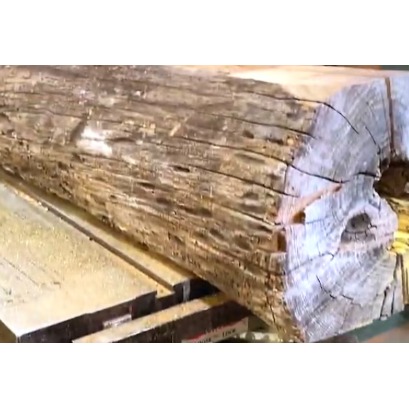
The hardness of wood is much more than a fact for carpentry enthusiasts: it is an essential property for those looking for resistant materials in construction, furniture or tools. Throughout the world, there are scientific measurement methods that allow tree species to be compared. According to the specialized site HowStuffWorks, the reference scale for this type of comparison is the so-called Janka test, a recognized international standard that determines how much force is required to embed a 11.28 mm diameter steel ball up to half its depth in a wood sample. This procedure allows establishing an objective scale and comparing the resistance and durability capacity of different woods under pressure, as detailed in the ranking prepared by the medium. The hardness of the wood is essential when identifying materials for applications that demand high resistance to wear, such as floors, tools, handles and exterior uses. Within industry and professional carpentry, the Janka scale has established itself as the reference criterion for classifying and selecting woods for specific uses. The 10 hardest woods: ranking and properties The following list was made under the Janka scale, based on international technical sources such as the Yale University report, and ordered from tenth to first place:10. Black Locust (Robinia pseudoacacia): Black Locust is a wood native to the United States, recognized for its natural resistance to decay and its frequent use in fences, posts and exterior constructions. Its high density makes it a durable option for demanding environments.9. Osage Orange (Maclura pomifera): Osage Orange comes from the United States and is characterized by its intense yellow color and hardness. Traditionally, it is used in the manufacture of arches and posts, and it withstands humidity and the passage of time very well.8. Brazilian Teak (Cumaru) (Dipteryx odorata): Cumaru, known as Brazilian Teak, is typical of South America and highly valued for floors and terraces for its resistance to abrasion and insects. Its golden brown hue makes it attractive in architectural applications.7. Desert Ironwood (Olneya tesota): Desert Ironwood is endemic to the arid areas of the southwestern United States and northern Mexico. This wood stands out for its high density and its ability to resist severe environmental conditions; It is appreciated in carving and tool work.6. African Blackwood (Dalbergia melanoxylon): African Blackwood is native to the African continent and is mainly used in wind musical instruments, such as clarinets and oboes, thanks to its fine grain and dimensional stability.5. Ipe Wood (Handroanthus spp.): Ipe Wood, from Central and South America, is highly sought after for the construction of terraces and outdoor furniture due to its high resistance to wear, humidity and insect attacks. With a hardness of about 3,600 lbf on the Janka scale, it is also known as “Brazilian walnut”. It is valued for its long life and its ability to maintain appearance and functionality even in demanding outdoor environments.4. Snakewood (Brosimum guianense): Snakewood gets its name from the mottled, snake-like grain pattern. Originally from South America, it is a very dense wood and is used in decorative objects, knife handles and components of musical instruments. Its reddish brown color with dark veins makes it very attractive in artisanal applications. The high demand and cost are due to both its rarity and the difficulty of working it due to its hardness.3. Lignum Vitae (Guaiacum spp.): Lignum Vitae is one of the heaviest and oiliest woods on the planet. Originally from the Caribbean and Central America, it was used in bearings and nautical applications thanks to its natural self-lubrication and longevity. With a hardness that can reach 4,500 lbf, it is also used in luxury items and some musical instruments. Currently, the species is protected due to its historical overexploitation and its inclusion on the list of endangered species.2. Quebracho (Schinopsis spp.): Quebracho, native to South America, is famous for its extreme hardness and high tannin content, which makes it suitable for railroad ties, poles and other applications where durability is a priority. Its nickname “axebreaker” reflects the difficulty of working it and its resistance to water, which makes it a key material in heavy construction.1. Australian Buloke (Allocasuarina luehmannii): Australian Buloke tops the ranking as the hardest wood in the world. It grows mainly in Australia and, although its use is limited due to the difficulty involved in working with it, it is considered indispensable in the creation of small objects and pieces of maximum resistance. Its approximate hardness of 5,060 lbf places it at the top of the Janka scale and makes it comparable to South American trees known for their extreme resistance. Applications and diversity of hardwoodsThe diversity of hardwoods reflects the richness of global ecosystems and the adaptations of each species. From the dry forests of Australia to the South American jungles and the arid regions of the United States, these species stand out not only for their resistance, but also for their historical relevance in cultures and industrial applications over time.