
They planted 97,000 trees in Colombia, but the plan to protect them also included more than 190 bee hives
Recovering the forests that help supply Bogotá with water required more than reforestation. A project combined nature and rural production so that its results could last. Planting thousands of trees can transform a landscape, but it does not guarantee that this change will survive the test of time. In the mountains of Cundinamarca, Colombia, the recovery of degraded areas posed an additional challenge: protecting nature without leaving aside the families who depended on those lands.
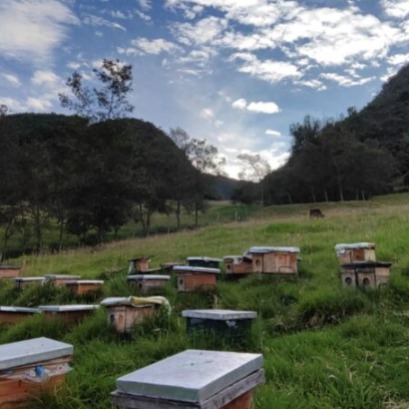
The expansion of agricultural activity had altered part of the territory. There were soils that needed rehabilitation, vegetation that needed to be recovered, and communities that required alternatives to sustain their income. Therefore, the objective of recovering the landscape was approached from several fronts. The program ended up bringing together more than 97,000 native trees, new agricultural practices and an addition that gave another dimension to the work: more than 190 beehives.The mountains that supply water to Bogotá needed a comprehensive recoveryThe Adaptation to Climate Change in the High Mountains project was developed in a territory where conserving ecosystems has consequences beyond their limits.The mountains that supply water to Bogotá needed a comprehensive recoveryThe Adaptation to Climate Change project in the High Mountains was developed in a territory where conserving ecosystems has consequences beyond their limits. According to the Inter-American Development Bank, the initiative was carried out between 2015 and 2020 in the landscape of the Chingaza-Sumapaz-Guerrero paramos. These environments intervene in the collection of rain and the regulation of the water that reaches Bogotá and nearby municipalities. The restoration reached the micro-basins of Guandoque, San Francisco, Chipatá and Chisacá. There, 81 families participated in the planting of more than 97,000 trees of native species, distributed between private properties and public lands. However, the intervention continued around the trees. Silvopastoral systems were developed on 60 farms that covered 55 hectares, integrating vegetation and livestock activity. Rainwater reservoirs, greenhouses with drip irrigation and measures to rehabilitate deteriorated agricultural soils were also installed. The purpose was to reduce the pressures that had contributed to degrading the environment. Recovering vegetation had to be accompanied by changes in the use of land and water, so that productive activities could better coexist with conservation. More than 190 hives provided an economic reason to care for the forest. Beekeeping added an especially valuable possibility: obtaining marketable products without having to transform new areas of forest into pastures or crops. The Colombian Ministry of Environment reported the installation of more than 190 hives. Honey, pollen and propolis offered families an additional activity linked to the resources of the landscape itself. During a visit to Sesquilé and Guatavita, the Ministry highlighted that some families were already generating income with honey and pollen. At the same time, the bees contributed to pollination and accompanied the recovery of previously deforested areas. This double role explains the interest in the incorporation of the hives: they could provide benefits for the vegetation and economic opportunities for those who lived in the territory. However, the results require careful reading. Official reports counted 577 hectares of recovered or rehabilitated ecosystems, but did not measure how much the restoration was accelerated thanks to the bees. Therefore, this area cannot be attributed exclusively to the hives. It was the result of an intervention that brought together reforestation, vegetation protection, water management, productive changes and community participation. The challenge was for the recovery to continue after the program. An environmental initiative also risks its future when financing ends. Trees need protection and the practices incorporated must be maintained over time. The program had resources from the Global Environment Facility, was implemented by the IDB and executed by the Colombian Ministry of the Environment, with support from Conservation International. The IDB balance highlights the participation of communities in the identification of climate risks and in the application of responses. The families were part of decisions that they later had to support on their own farms. In this context, the beehives provided something that a plantation alone hardly offers: an activity whose benefits could reinforce the interest in conserving the environment. The experience leaves a concrete idea. To recover a mountain, we must also consider how those who inhabit it live. Trees, water, soils and rural incomes were part of the same challenge; addressing them together was the basis of this initiative.