
The fellings of eastern Buenos Aires: a forest heritage that needs to be conserved
To the east of the province of Buenos Aires, one of the most unique forest ecosystems in the Pampas region develops, although little known outside the scientific field. Due to the abundance of the native species Celtis tala (logging), these are called talars, and constitute an important native forest community, which alternates with areas of Pampas Grassland.
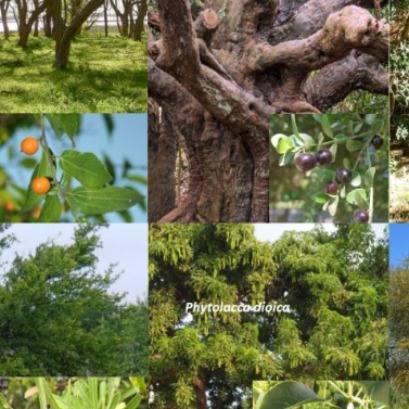
These forests have a close relationship with local communities, since they are part of their natural and cultural heritage, and provide important benefits, such as water and climate regulation, soil protection, biodiversity conservation, and spaces for recreation and environmental education. Its conservation is, therefore, associated with important social and ecosystem benefits for the region. Although Tala dominates the canopy, these forests are home to a diversity of woody species that provide different strata and microhabitats. Among them, Scutia buxifolia (coronillo), Schinus longifolia (molle), Jodina rhombifolia (bulls shadow) and Phytolacca dioica (ombú) stand out, along with species associated with open or more humid sectors, such as Vachellia caven (espinillo), Parkinsonia aculeata (cina-cina) and Erythrina crista-galli (ceibo). A forest that grows on conchillaThe Talares extend along a coastal strip from the town from San Nicolás to Mar Chiquita, and they do not grow on any soil: they develop on ravines, calcareous deposits associated with ancient marine ingressions and dunes of wind origin, which guarantee good drainage, surrounded by floodplains. The largest remaining area and in the best condition is preserved on the conchilla ranges of eastern Buenos Aires. An ecosystem in decline Historically, logging lost a large part of its surface due to the change in land use due to urban expansion, agricultural advance and, very critically in the east, conchilla mining. These transformations alter the environmental conditions of the forest, favoring periods of higher temperature and lower water availability. Added to this is the invasion of exotic woody species such as Ligustrum lucidum (privet), which can completely replace the native community. The loss and degradation of the forest continues to be a problem for the region, compromising the conservation of the relicts that still persist. Without effective conservation and management measures, the progressive reduction of its surface and the advance of exotic species could lead to the disappearance of these forests in sectors of the region. 15 years of experiences and learning in the restoration of the fellingsIn areas where a large part of the remaining surface of the forest is concentrated, the Laboratory of Research in Ecological and Environmental Systems (LISEA) has been studying the Clearings for more than 30 years and, for the last 15 years, it has been developing active ecological restoration trials through reforestation with local tree species, mainly C. tala. The first experiments, started in 2010 both in deforested areas and in abandoned shell quarries, showed practically total mortality of C. tala. This indicated that, despite being the main species of the Talares, it is not suitable to begin the restoration of degraded cordon forest areas. From these first experiences, trials began with other characteristic species of these forests, mainly S. buxifolia, P. aculeata, S. longifolia and V. caven. Plantations with these species showed better growth rates and survival in the field. These results raised new questions: What makes these species more suitable for restoration of degraded areas? Do they have water stress tolerance mechanisms that allow them to perform better in these areas? Is it possible to develop nursery production techniques that allow these attributes to be promoted? To answer these questions, experiments were developed under controlled conditions in the nursery, in which the response of a large set of woody species native to the region to water stress was evaluated. Both species that had shown the best performance in the field and those that had presented greater difficulties in establishing themselves were included. Different species, new opportunities From experiments carried out in controlled nursery conditions, we found that the species that present the best performance in the field also have water regulation strategies that allow them to grow and survive under adverse conditions. In this sense, C. tala did not present the most favorable water regulation strategies compared to other species from the Talars of Buenos Aires. This knowledge is relevant to select suitable species and develop specific nursery production techniques that allow plants to be prepared for the conditions they will later find in the field. The intervention area is characterized by periods of drought that can last several years, and whose duration and intensity have increased in recent decades. Therefore, it is essential to select species capable of tolerating these environmental conditions and use them to recover basic ecosystem functions in areas that have suffered severe degradation processes. Future perspectives Ecological restoration plans must consider as a starting point the conservation of forest areas that still persist. In this sense, after more than 15 years of monitoring plantations with native species in degraded areas of the shell logging of eastern Buenos Aires, our results show that it is possible to restore degraded areas of the forest from an ecological and silvicultural perspective. Starting restoration in areas close to sites where significant areas of forest are still preserved should be a priority, since it would allow for the connection between these remnants and contribute to the conservation of this ecosystem. Ecological restoration work is expensive and requires time to obtain results in the field. Therefore, developing an adequate technical base and efficient methods to carry out these interventions is essential to optimize resources and promote the success of restoration. Our experiments show that C. tala should not be used in the early stages of restoration. This conclusion may be contradictory: How can we restore clearings without reforesting with logging? Although initially it is not possible to reforest with C. tala due to its high mortality rate, the recovery of ecosystem functions in highly disturbed sites through other logging species would allow, in later stages, to begin to enrich degraded sites with the main forest species. There are still questions regarding the silviculture of these species in crucial stages, such as nursery production and field implementation. Solving them will allow us to optimize these processes and advance the recovery and connectivity of isolated forest patches, as part of Talar management and conservation plans that are economically viable and accepted by local communities.