
Technologies and new destinations for wood were analyzed by specialists at the forestry conferences in Entre Ríos
The traditional Entre Ríos Forestry Days took place on Thursday, September 24 and Friday, September 25 at the INTA Concordia headquarters, organized in conjunction with the Association of Agricultural Engineers of the Northeast of Entre Ríos (AIANER). The proposal brought together representatives from different parts of the country and countries in the region to analyze the current challenges of the activity.
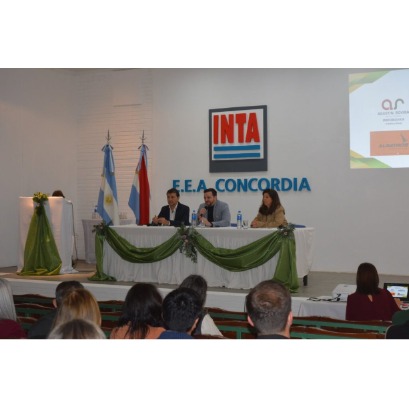
During the conference, issues related to forest health, technological innovation, Artificial Intelligence, logistics, energy, sustainability, wood industrialization and new construction solutions were addressed. The provincial government participated in the meeting. The agenda of the conference also included a specific space to analyze the forestry development policies of Entre Ríos and Corrientes. Guillermo Bernaudo participated on behalf of the provincial government, sharing the panel dedicated to public policies linked to the growth of the activity, along with Luis Mestres. The presence of the Entre Ríos official incorporated the provincial perspective into a debate that is relevant for a productive chain with a strong impact on the region, both for its articulation with primary production and for its link with transportation, the processing industry and markets. During the opening, the director of INTA Concordia, Javier Oberschelp, highlighted the significance of reaching four decades of continuity and the role of the institutions that held the meeting over time. For her part, Paula Dacunda, representative of AIANER, highlighted the continuity of joint work between the private sector and the State, while Sebastián Aristide, secretary of Productive Development of the Municipality of Concordia, highlighted the importance of maintaining a space for discussion and exchange of experiences. Technology and new destinations for wood The technical agenda began with issues related to health and forest protection. The effects of cutter ants and the tools available for their management were analyzed, in addition to the threat posed by the ragweed beetle Euwallacea fornicatus. Technological innovation occupied another of the main spaces, with the presentation of experiences of using Artificial Intelligence in forestry activity and tools aimed at improving harvest management and reducing technological gaps. Cases linked to the optimization of logistics in forestry-industrial transport were also presented and the relationship between energy and forestry production was analyzed.Other of the axes was related to the use of wood in industrialized construction systems. Specialists from Uruguay presented experiences linked to Mass Timber, an alternative based on engineered wood products that allows expanding the destinations of the raw material and advancing in the generation of added value. Recognition of the Fracalossi family As part of the celebration for the four decades of the conference, the Organizing Commission maintained one of the traditions of the meeting: recognizing people, companies or institutions that make contributions to the development of the forestry-industrial sector of Entre Ríos. In this edition, the distinction went to the Fracalossi family, from Concordia, for its trajectory and commitment to regional growth. The company Fracalossi Maderas has more than three decades of work and stood out for the incorporation of technology and the generation of added value to forestry production. Among the advances developed throughout that trajectory are the implementation of dryers, the manufacture of floors with international standards and the incorporation of state-of-the-art automated equipment. The recognition also highlighted its contribution to job creation and the development of the regional forestry industry. A day to look to the future The agenda was completed with a field day on Friday the 25th, which included demonstrations of companies and technologies linked to forestry activity. A course on PEFC certification and group models was also developed, aimed at delving into the aspects linked to certification and sustainable management of forestry production. The 40 editions of the Entre Ríos Forestry Conference represent four decades of exchange between professionals, companies, institutions and specialists from Argentina and other countries in the region. On this journey, the meeting accompanied the evolution of forestry activity and the incorporation of new challenges related to productivity, health, sustainability, industrialization, technology and innovation, with Concordia as one of the central scenarios of that process.